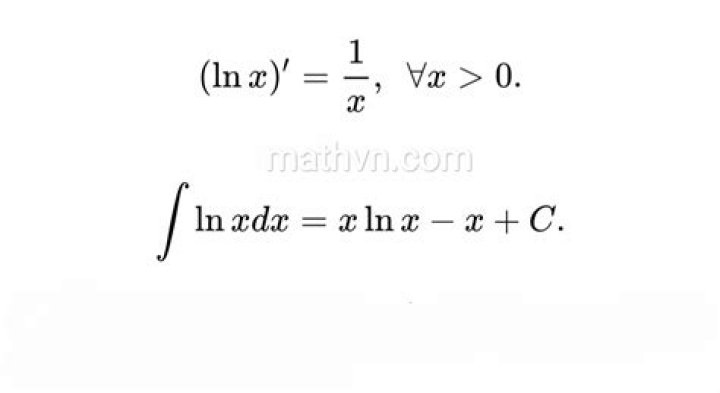
$\ln(x^2)$ vs $2\ln x$
These two are supposed to be equivalent because of the properties of logarithms, but the domains of $\ln(x^2)$ and $2\ln x$ seem different to me. For exam...
Apr 22, 2026 1 VIEWS
These two are supposed to be equivalent because of the properties of logarithms, but the domains of $\ln(x^2)$ and $2\ln x$ seem different to me. For exam...

I've just read section 9.2.1 in Numerical Recipes Ed. 3 (Press et al. 2007), which describes Ridders' method of root finding. I understand that ...
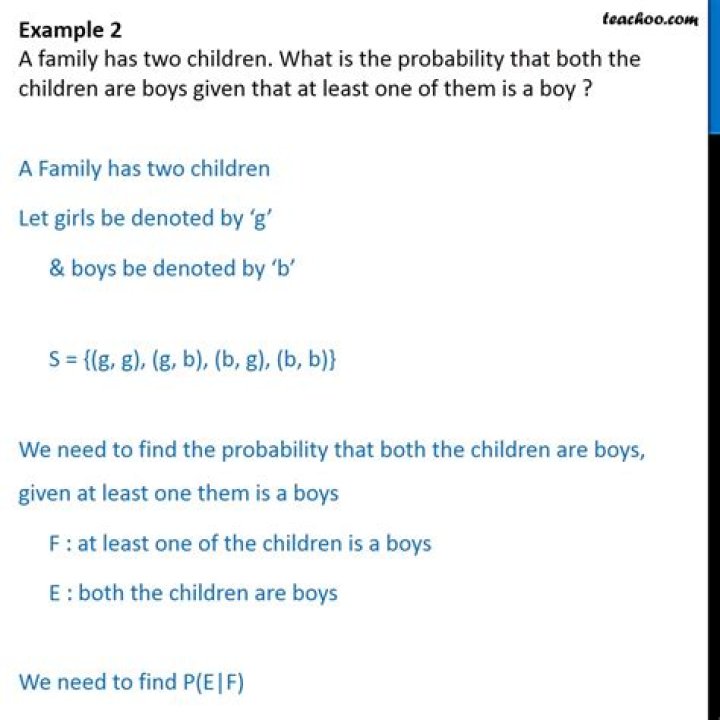
I am in 12th grade and I can't really understand a question in conditional probability. The question states There is a family with 2 children either ...
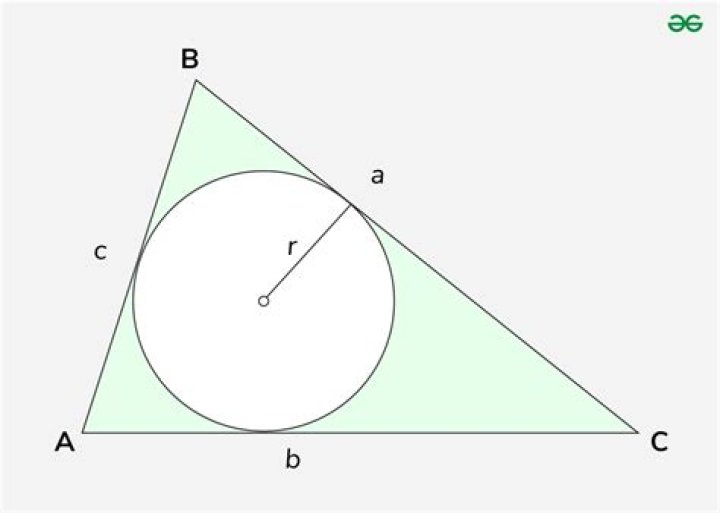
A triangle ABC is drawn to circumscribe a circle of radius 4 cm such that the segments BD and DC into which BC is divided by the point of contact D are of...
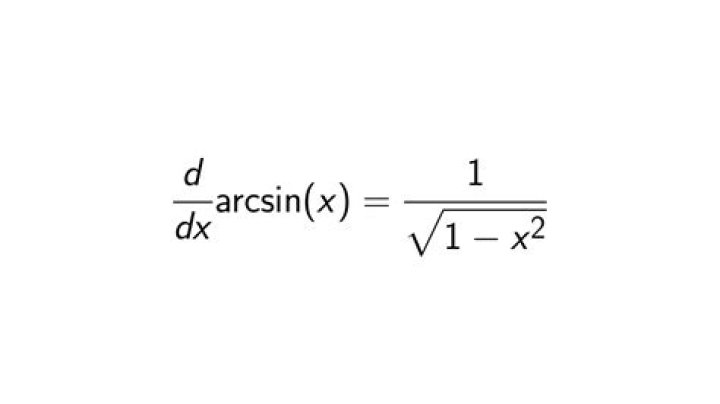
Find $\int x^2\arcsin(2x)dx$ My work. $\frac{1}{3}\int \arcsin(2x)dx^3=\frac{1}{3}(x^3\arcsin(2x)dx-\int x^3d(\arcsin(2x))$ This yields to finding $\int \...
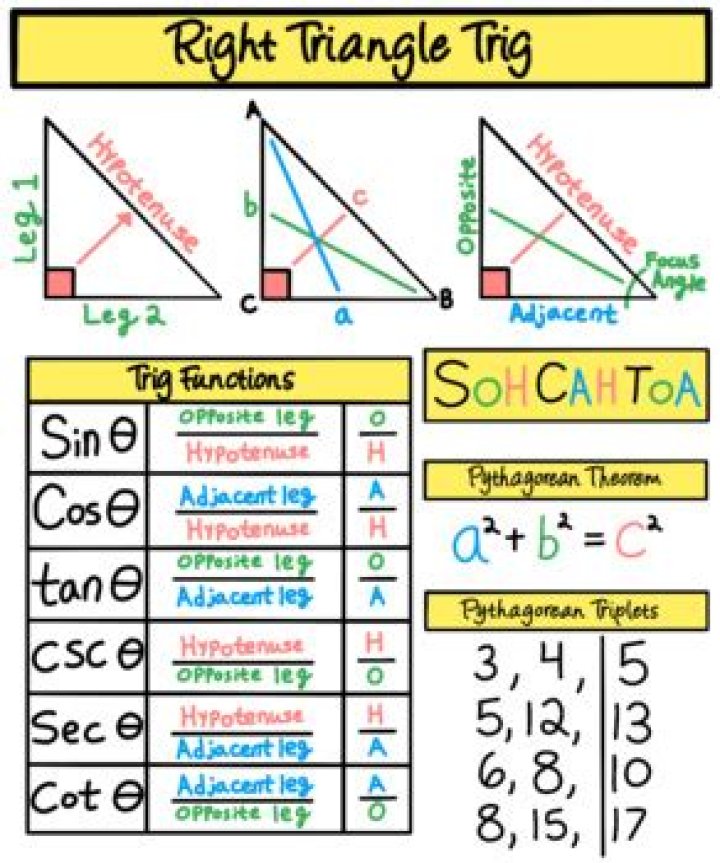
Taking online classes and trying to find the angle in degrees of csc when given a decimal Example in text not helping Question is csc (theta) = 1.245 and ...
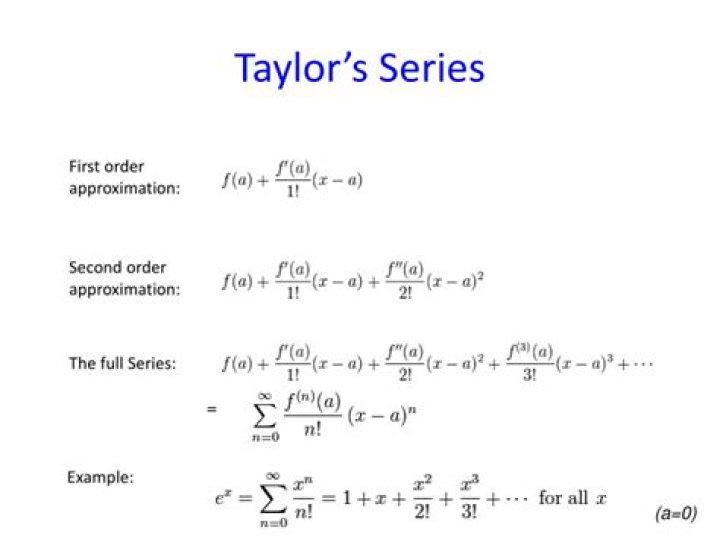
I have the taylor series $f(z)=f(x_0)+(x-x_0)f'(z)+1/2(x-x_0)^2f''(z) ...$ and I am told that "As a first order approximation," $x-x_0$ ~ $...
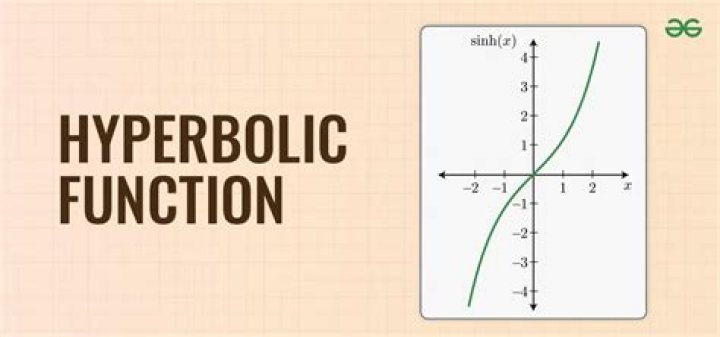
I know that $\sinh(x) := \frac{e^x-e^{-x}}{2}$ and $\cosh(x) := \frac{e^x + e^{-x}}{2}$ by definition. But what exactly is the significance of this and ho...
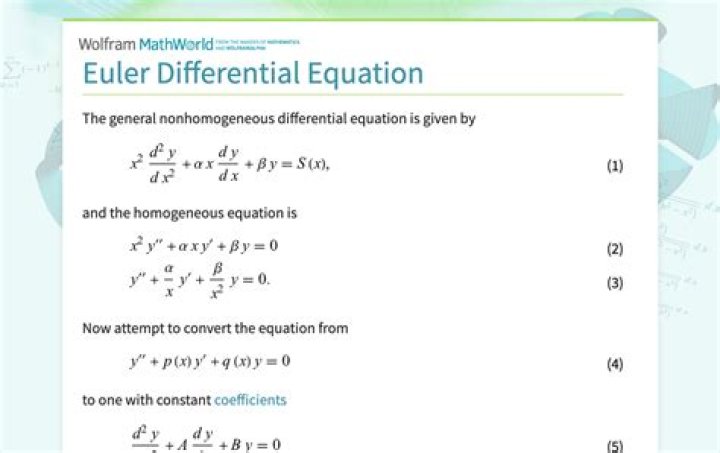
So, I am trying to attempt part b of this problem using my answer from part a. I just want to confirm if I did part a correctly and how I can do part b?
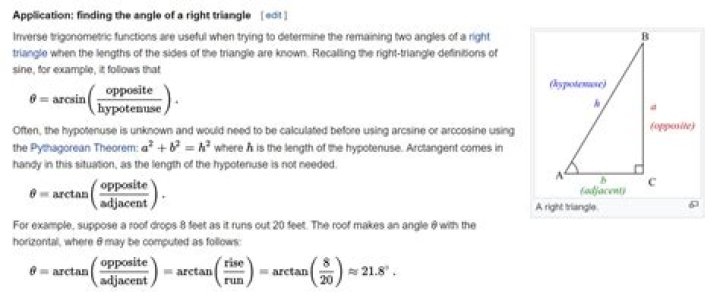
If I have $\arcsin(8/20)$, what angle is this? This is from Wikipedia and the answer is $21.8^{\circ}$. But I do not understand, by hand, how I can get th...
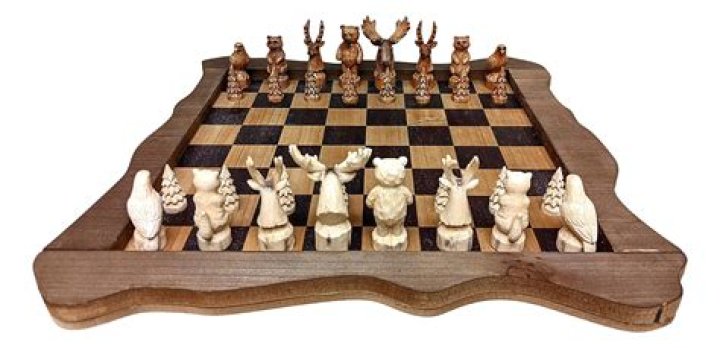
It is generally difficult to determine whether a (large) graph have no Hamilton cycle (As opposed to determining whether it has any Euler circuit). This e...
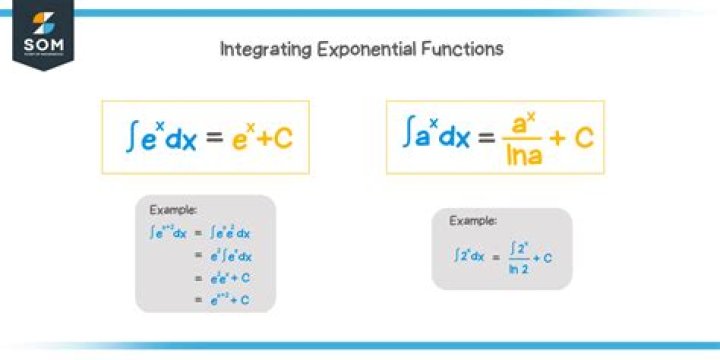
This problem would be easy if I could use the fact that $\exp(x)=e^x$, but I have to use the following definition: $$\exp(x)=\sum_{n=0}^{\infty}\frac{x^n}...