Why does the cumulative distribution function of the standard normal distribution have point symmetry in (0,0.5)?
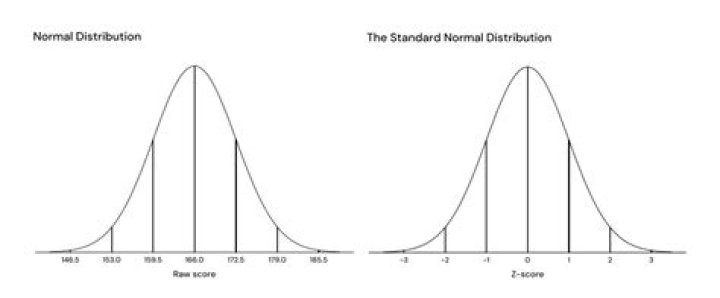
The probability distribution function for the standard normal distribution, $\phi(z)=\frac{e^{-\frac{1}{2}z^2}}{\sqrt{2\pi}}$ is even, with line symmetry in the y-axis.
The cumulative distribution function of the standard normal distribution is $\Phi(z)=\int_{-\infty}^z\phi(t)dt$.
My textbook said that
Because $\phi(z)$ is even, $\Phi(z)$ has point symmetry in $(0,0.5)$.
Which makes sense to me by looking at their graphs (Since the PDF is the derivative of the CDF), but is there a more rigorous mathematical proof for why the CDF has point symmetry in (0,0.5)?
And more importantly, is there some general pattern/mathematical theory that I am missing here which I am supposed to know?
What I mean by this is, obviously, the primitive of $y=x^2$ (which is even) is $y=x^3$, which has point symmetry in the origin. But I was wondering if there is some greater mathematical theory that says something about 'if a function has line symmetry, its primitive will always have point symmetry' or something like that..
Thanks..
$\endgroup$1 Answer
$\begingroup$$$\Phi(x) = \int_{-\infty}^x \phi(z) dz \stackrel{z \to -z}{=} \int_{-x}^{+\infty} \phi(-z)dz = \int_{-x}^{+\infty} \phi(z)dz = 1 - \int_{-\infty}^{-x} \phi(z)dz = 1- \Phi(-x)$$
$\endgroup$ 0