Which values can $k$ take, if $(k+6)(k-2)>0$
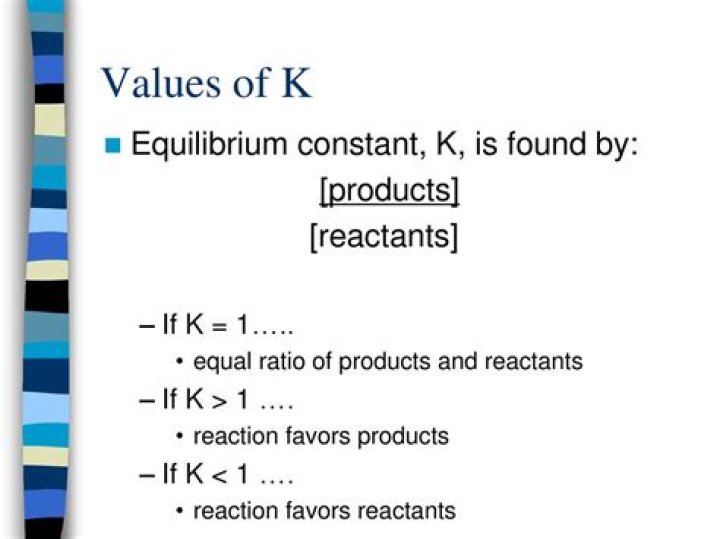
Question: Find the set of values of $k$ for which the line $y = kx - 4$ intersects the curve $y = x^2 - 2x$ at two distinct points.
I have pretty much solved this.
Considering both intersect, I equated both the equations and formed a single equation for which, I applied the condition discriminant is greater than zero. I ended up with this:
$$(k + 6)(k - 2) > 0.$$
However, I need to find the set of values. How do I represent the above answer as a set of values?
$\endgroup$4 Answers
$\begingroup$$$(k + 6)(k - 2) > 0$$
$2$ cases are possible here.
Case-$1$:
Both $k + 6>0$ and $k - 2>0$ $\implies k>2$
Case-$2$:
Both $k + 6<0$ and $k - 2<0$ $\implies k<-6$
So the required set of values is $$k \in \color{red}{(-\infty,-6)\cap(2,\infty)}$$
$\endgroup$ 6 $\begingroup$Since you seem to struggle with some of the notation used in the other answers, I'll try to doe it a little differently.
Note that $(k+6)(k-2)=(k+2)^2-16$. So we solve: $$(k+2)^2-16>0\\ (k+2)^2>16\\ \vert k+2 \vert>4.$$
Now $\vert k+2\vert > 4$ means that we have $$k+2<-4\;\;\vee \;\;4<k+2\\ k<-6\;\;\vee\;\; 2<k.$$
$\endgroup$ 2 $\begingroup$You can do it various ways; I'd default to intervals, but you can do set notation too: $$ k \in (-\infty, -6)\cup (2, \infty) $$ Note the open intervals here. Alternatively: $$ \left\{ k: (k<-6) \vee (k>2) \right\} $$
$\endgroup$ 4 $\begingroup$The value will be greater than 0 only if 1) both the terms k+6 and k-2 are positive(greater than 0) 2) or both the terms are negative( less than 0) 1) k+6>0. k-2>0 . k>-6 k>2 . -6<2 . Hence k>2. 2) k+6<0. k-2<0 . k<-6. k<2 Hence k<-6 therefore k belongs to (-infinity,-6)U(2, infinity)
(from your comments you have said you don't know sets . So here the round bracket means all real numbers between the two except the.and U means the union of all the numbers in the bracket.)
$\endgroup$