What is the cross-sectional area and volume of this object?
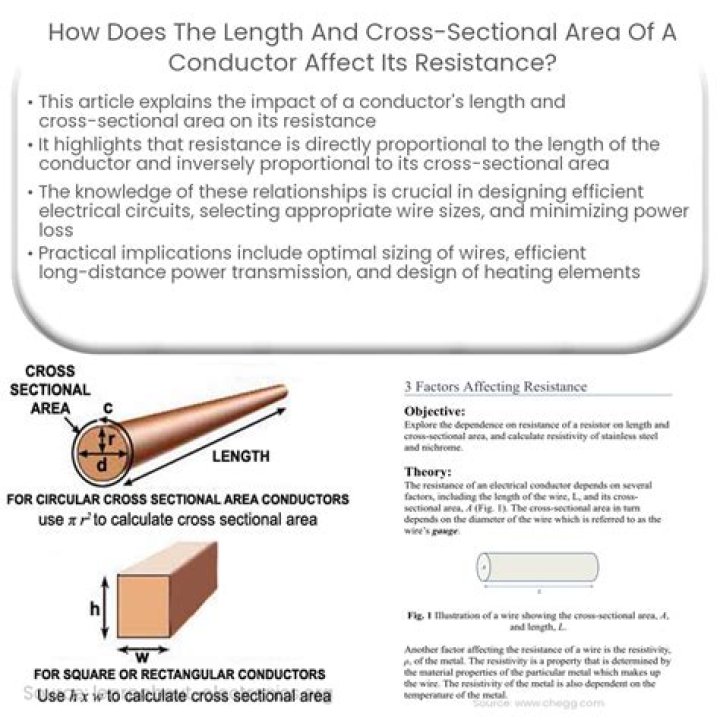
All size of the object that is rectangular prism is being increased $2$ times.
$a)$ What happens to the cross-sectional area?
$b)$ What happens to the volume?
I'm a bit confused. I want to take your hints/solution ways to be more succesful on these problems.
Regards
$\endgroup$ 01 Answer
$\begingroup$If all the dimensions are doubled, they become $2a, 4a$, and $6a$. So the volume becomes $V = (2a)(4a)(6a) = 48a^3$. Notice that the original volume was $V = (a)(2a)(3a) = 6a^3$, and so doubling all the dimensions multiplies the volume by 8. This is because $2^3 = 8$.
By "cross-sectional area" one would probably mean the area of the rectangular cross-section obtained by slicing the box with a plane parallel to the bottom face of your picture. So, the original cross-sectional area would be $(2a)(3a) = 6a^2$. After doubling the dimensions the cross-sectional area becomes $(4a)(6a) = 24a^2$. So, the cross-sectional area got multiplied by 4. This is because $2^2 = 4$.
If you take a real car and make a model of it by dividing all linear measurements (length of car, diameter of tires, etc.) by 10, then the volume of your model would be found by dividing the volume of the car by 1000 (since $10^3 = 1000$. But the area of the windshield (a two-dimensional measurement like a cross-sectional area) would be divided by only 100 (because $10^2 = 100$).
$\endgroup$