What does $f(x,y)$ mean?
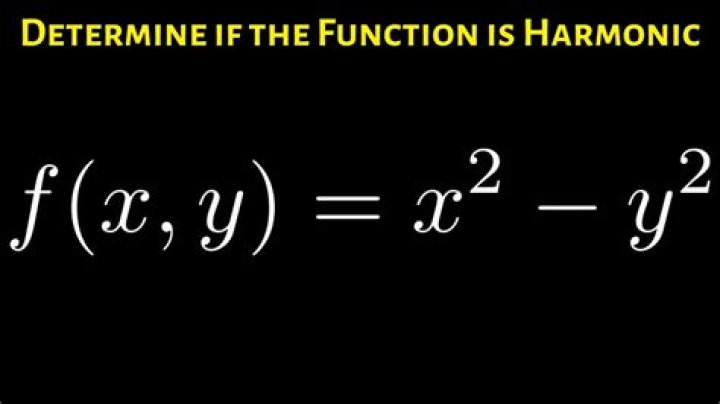
I know from the chapter "functions" that $f(x)$ is a function of $x$ and to roughly put it, it maps $x$ values to another set called co-domain where all the $y$ values are.
But I also sometimes see $f(x,y)$ on internet. I can guess that it means some expression in $x$ and $y$.
I'm not familiar with them yet and they aren't in my high school syllabus but I'd love to know more about and I have a few questions,
$\endgroup$ 0
What type of function is this? What's it called?
What does is represent? Can you also represent $f(x,y)$ using arrow diagram between $2$ sets?
Is $(x,y)$ in $f(x,y)$ an ordered pair? Or $f(x,y)$ is same as writing $f(y,x)$
5 Answers
$\begingroup$You can call $f(x,y)$ might be called a function of two variables. An example that might be helpful would be something like $f(x,y)=x^2+y^2$. This function takes in two numbers, takes their squares and adds them. Note that a function of two variables doesn't need to do the same thing to both variables. We could also make a function $g(x,y) = x^3 + xy+1$ for example. You can represent them using an arrow diagram. Your set to the left of your arrow will be the set of ordered pairs of $(x,y)$. And yes, the you do need to think of $(x,y)$ as an ordered pair. It is not necessarily the case that $f(x,y)=f(y,x)$. See the $g(x,y)$ example above and note that $g(0,1)=1$ but $g(1,0)=2$.
Many functions in real life are functions of more than one variable. An example from physics: the gravitational pull an object experiences from a planet is a function of both the planet's mass and the distance to the planet.
$\endgroup$ 2 $\begingroup$$f(x,y)$ is a function which takes in an ordered pair $(x,y)$ and gives some output. It's still called a function, but if you want to be specific, you can call it a function of two variables.
You can still represent it using an arrow diagram (depending on your drawing skills, of course). For instance, if $x$ and $y$ are both real numbers, then the set of all possible ordered $(x,y)$ pairs is the plane, so that would be the natural domain to let the arrow point away from.
If the order of $x$ and $y$ happens to not matter for your function, then it is called symmetric.
$\endgroup$ $\begingroup$Here is a short answer to your questions:
1) The function can be called a bivariate function; it is a function that depends on two variables $x$ and $y$ that may assume different domains. The function is defined on the union of those domains. An example is $$ f(x,y) : = x^2 + y^2$$
If you fix $x$ to any value say $\bar{x}$, then $f(\bar{x}, y)$ is a function in $y$. The same holds if you fix $y$ instead, then the function becomes a function in $x$.
2) it represents a rule of mapping values of $x$ and $y$; you can still use arrow diagrams yes.
3) When you define the function, the pair $(x,y)$ should be ordered. But it is a matter if notation which argument u want to appear first.
$\endgroup$ $\begingroup$That's called a function of two variables. A function $f:\mathbb{R^2} \to \mathbb{R}$ is a function that maps a pair of real numbers $(x,y)$ to another real number $z$. Of course we don't limit ourselves only to two variables, the general case are functions from $\mathbb{R^n}$ to $\mathbb{R^m}$, they map $n$-tuples $(x_1,...,x_n)$ to $m$-tuples $(y_1,...,y_m)$. It's above high school level though.
$\endgroup$ $\begingroup$1) It is a function of two variables.
2) It represents a function from points in a plane to points on a line.
3) (x,y) is an ordered pair. In general f(x,y) is not the same as f(y,x).
$\endgroup$