Weird stuff happening with complex numbers on a ti-84
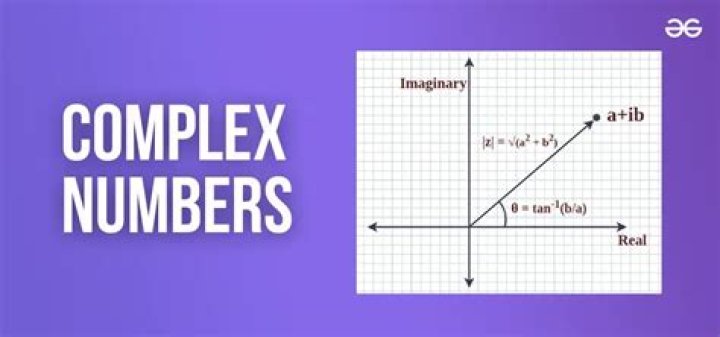
So, I'm trying to do some calculations for my Electrical engineering homework. This requires a bit of algebra with complex numbers. I have been finding that some of the calculations that my calculator has been making don't really make sense. This is especially apparent if I try to enter complex numbers into my calculator in their polar form. Correct me if I'm wrong, but it my understanding of switching back and forth between rectangular and polar forms of complex numbers is the following : A*e^(i*x) => A cos(x) + i sin(x)
However, if I input (while the calculator is in degrees mode, and it is set up to output complex quantities in rectangular form) e^(i*45) and press enter the output is : .525+.851 * i. My understanding of complex numbers leads me to believe that the output should have been: cos(45)+sin(45)*i = .707 + .707*i. Also, if I put the calculator in polar mode and input e^(i*45) the output is: 1e^(58.31). Why is it giving me a different output? What is going wrong here? Also, it is saying that e^(i*100)/e^(i*50)= e^(i*-15.211). Also an input of 1+i yields an output of 1.414*e^(i*45)...which is correct. Any idea what's going on here? Is the ti-84 just garbage when it comes to complex algebra in polar form?
$\endgroup$ 66 Answers
$\begingroup$Your calculator won't work pleasantly with degrees in this case. It likely defines $e^{ix}$ as the power series $$e^{z} := \sum_{n=0}^\infty \frac {z^n}{n!}$$ In the case of $z=ix$, this simplifies to $\cos(x) + i\sin(x)$ by looking at the respective power series. These latter terms are, of course, in terms of radians; but changing 'radians' to 'degrees' doesn't change the above power series (or else your calculator would screw up, say, $e^2$ and instead output $e^{\pi/90}$ - trying to convert the entire exponent from 'radians' to 'degrees', even though they don't apply here!) So if you're doing things in degrees, you'll either need to plug into $\cos(x) + i\sin(x)$ directly, or first convert into radians.
$\endgroup$ $\begingroup$I came across the same problem. You can convert the radians into degrees though. With $e^{45i}$ put in $e^{\frac{45\pi}{180}i}$. The angle $\times \frac{\pi}{180}$ converts it to radians. I know it is annoying and I am still looking around for anyone who has written a program to do this. I may end up just writing one myself...
$\endgroup$ 2 $\begingroup$Mathematically, $e^{ix}=\cos(x\;\mbox{radians})+i\sin(x\;\mbox{radians})$. This is independent of what setting your calculator is on. However, here's a "fix":
Can you make the TI-84 "remember" a value? Set $E=e^{\pi/180}\approx1.01761$ on the calculator. Now, $E^{ix}=\cos(x^\circ)+i\sin(x^\circ)$.
$\endgroup$ $\begingroup$You can store the conversion factor between degrees and radians as a variable and just insert it into the exponent in polar. So I stored (pi/180) in the variable R. Then, for my problem, I scrolled to the answer I got from a previous calculation that I needed to use again(where the answer was in degrees as 12.12e^26.1275i, pressed enter to reuse it, and inserted my variable R into the exponent to get 12.12e^R26.1275i. Then I was able to multiply this by another number in polar, in my case 1200e^0i,to get the correct answer with the angle displayed in degrees. So basically, you need to store the degrees to radians formula as a variable and insert it between calculations when needed.
$\endgroup$ 0 $\begingroup$Here it is September 2017 and this problem with complex polar math still exists on the TI-84CE. I have found that the TI-89 performs complex math using my choice of polar/cartesian, radians/degrees settings. So TI knows how it is done. Should you switch to an '89? You might if you don't mind a smaller, monochrome screen.
$\endgroup$ $\begingroup$The gentleman that suggests going to radians always is wrong. EEs use degrees many places, not radians. For instance when dealing with phasors. TI-84 is not good at handling that.
What you have to do if you want to express $45$ degrees as $\large e^{(\text{degree_angle}\cdot i)}$ is by entering this at your calculator: $\large e^{(\text{degree_angle}\cdot2\pi/360)}$
To check that it is true, try this on your $Ti-84$: $e^{120i} = 0,814+0,580i$ Then to ehcek you result, use the angle from the CPX menu: $\text{angle}(0,814+0,580i) = 35,49 $---- well thats plain WRONG!
What calculator is better at handling this? I messed up on the exam due to the unreliable handling of $e^{xi} $with the $TI-84$
$\endgroup$ 0