Standard notation for the set of integers $\{0,1,...,N-1\}$?
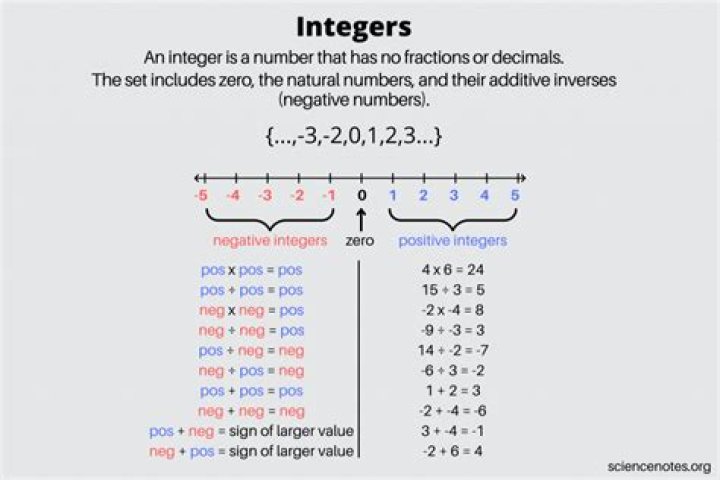
I was wondering if there exist a standard notation for the set of integers $\{0,1,...,N-1\}$. I know for example $[N]$ could stand for the set $\{1,2,...,N\}$ but what about the former, i.e. $\{0,1,...,N-1\}$?
$\endgroup$4 Answers
$\begingroup$It depends on the context, but sometimes $[N]$ denotes the set $\{0,1,\ldots,N-1\}$. In modern set theory the integers are represented using sets so $N$ is actually the set $\{0,1,\ldots,N-1\}$ (and $0=\varnothing$, of course).
I am unaware of a particular "standard" for this set, in some places you can see $\Bbb N^{<N}$, but in other places that notation would denote all the sequences of length $<N$. And as always I give the following advice. You can introduce a notation, just be clear about it:
We shall denote by $S(N)$ the set $\{0,\ldots,N-1\}$...
That's a perfectly legitimate notation (if it doesn't clash with other notations using the letter $S$ of course).
$\endgroup$ $\begingroup$A few hints:
- You can use $$[0,N)\cap \mathbb{N},$$ but that's ugly.
- I've seen $$\mathtt{[0..N)},$$ but it was defined and the context was so discrete that using $[0,N)$ wouldn't make even the slightest sense.
- Sometimes writing $\{0,\ldots,N-1\}$ is just the right way, introducing a new notation for everything might make the text less readable.
- If you were to use it so frequently, that it really helps the reader, then probably you would like to make it as short as possible. In such case introduce a new symbol, a few examples that might interest you:
$$ \lceil N\rfloor, \quad [\![N ]\!], \quad \overset{\curvearrowright}N , \quad \left\{{0 \atop N-1}\right\}.$$
- Finally, if you are writting in $\LaTeX$, then independent of what you use, I recommend defining a new command just for this, e.g.
\newcommand{\XYZ}[1]{\left\{0,\ldots,{#1}-1\right\}}which would produce $\newcommand{\XYZ}[1]{\left\{0,\ldots,{#1}-1\right\}}\XYZ{\spadesuit}$ for\XYZ{\spadesuit}.
I hope this helps $\ddot\smile$
$\endgroup$ 1 $\begingroup$$\{0,1,...,N-1\}$ is the set of integers modulo $N$ (which is more accurately the set of congruence classes) modulo $N$: $\quad\mathbb Z_N,\;$ or $\;\mathbb Z/N\mathbb Z$.
$\endgroup$ 1 $\begingroup$As you say, $[n]$ is relatively standard as the set of integers from $1$ to $n$, suggesting that $[n]-1$ might be suitable and reasonably unambiguous.
Alternatively using a summation-type notation would work, although is perhaps less of a shorthand than you appear to be looking for: $\bigcup_{0}^{n-1}\{i\}$ or even perhaps ${\large\{}i{\large\}}_{0}^{n-1}$.
Finally you can always invent your own notation, say $n{\downarrow}$ , provided you define it clearly.
$\endgroup$