Set of natural numbers and Peano axioms
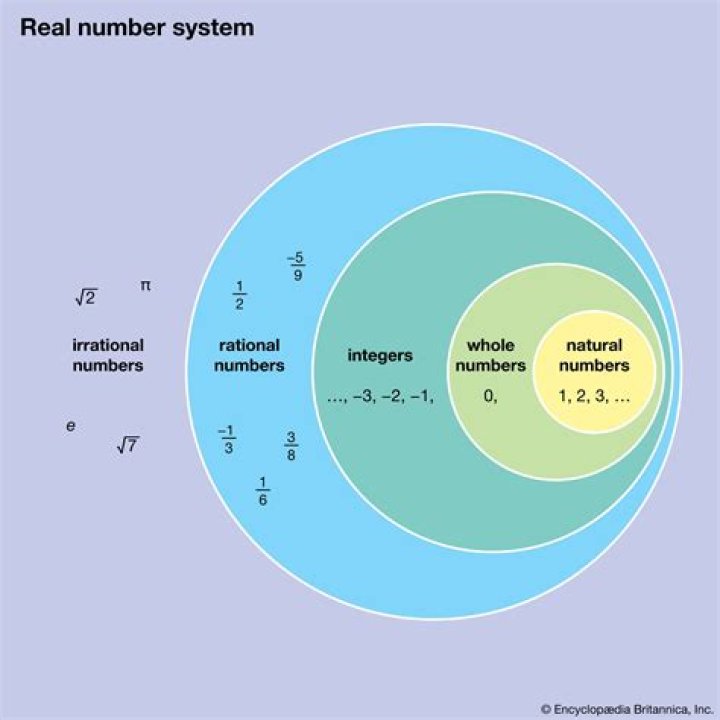
Under standard Peano axioms (below, from Wikipedia), what implies how the set of natural numbers actually looks like, e.g. that 1 = S(0), 2 = S(1), 3 = S(2), etc.?
Why not for example 2 = S(0), 4 = S(2), 6 = S(4), with no odd numbers or some other variation of it?
Or is the above also a part of the definition of natural numbers and I'm missing some axioms here?
- 0 is a natural number.
- Every natural number has a successor which is also a natural number.
- 0 is not the successor of any natural number.
- If the successor of x equals the successor of y, then x equals y.
- The axiom of induction: If a statement is true of 0, and if the truth of that statement for a number implies its truth for the successor of that number, then the statement is true for every natural number.
1 Answer
$\begingroup$I think you are missing the point of the Peano Axioms. It postulates that there is a set $\,\mathbb{N}\,$ which is by convention called the set of natural numbers. We are given that zero is a natural number and is by convention denoted by $\,0.\,$ The successor of zero is a natural number is by convention denoted by $\,1.\,$ According to Peano postulates the defining property of $\,1\,$ is that it is the successor of $\,0.\,$ Similarly for all of the other natural numbers. Each natural number is defined to be the successor the the previous number. In other words, Only the number zero is initially given and all of the rest of the natural numbers are determined as the repeated successors of zero. For example, $\,1:=S(0),\,2:=S(S(0)), \,\dots.\,$ The actual identity of the other natural numbers is not important. What is important is that they are the successors of zero. You are allowed to use any set as the set of natural numbers as long as one element is singled out as the zero element and all the rest of the elements are the successors of zero.
Thus, if you wish, you can use the set of even numbers as a model of the natural numbers and then define$\,2=S(0),\,$ $4=S(2),\,$ $6=S(4),\,$ $\dots.\,$In this model the number denoted by $\,2\,$ is the successor of zero but this does not change its properties in the model of the natural numbers. For example, in this model, we have $\,2\times 2=2\,$ using the Peano definition of $\,\times\,$ (multiplication) of natural numbers. This is because $\,2\,$models the natural number $\,1\,$ and has the same properties in the model as $\,1\,$ has. This is an example of the abstract nature of modern axiomatic mathematics. The natural numbers are not defined by what they are, but by what they do. All models of the Peano natural numbers are equivalent in the sense that they all have the same properties in the model. The Wikipedia article Peano axiomshas a lot of details, but the fundamental idea is that it is an axiomatic model of the natural numbers. Previously mathematicians took them as given somewhat as in the quote "God made the integers, all else is the work of man".
$\endgroup$