Relationship between Rademacher distribution and Normal distribution
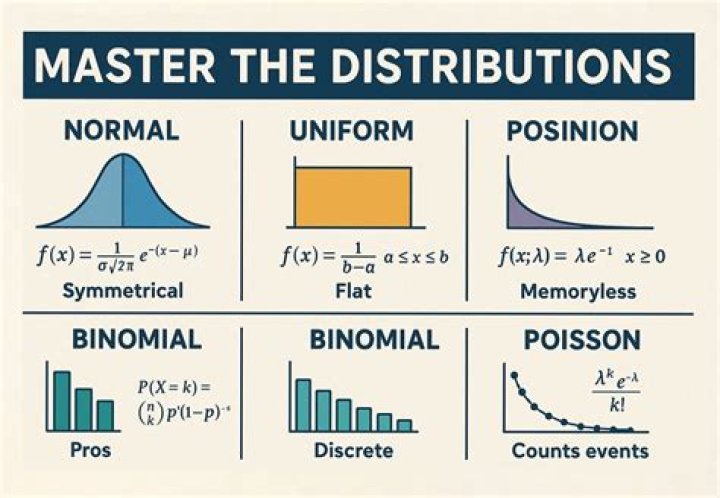
Is there any relationship between Rademacher distribution and Normal distribution? The Rademacher distribution is given as
The probability mass function of this distribution () is
${\displaystyle f(k)= \left\{{\begin{matrix}1/2&{\mbox{if }}k=-1,\\1/2&{\mbox{if }}k=+1,\\0&{\mbox{otherwise.}}\end{matrix}}\right.}$
In terms of the Dirac delta function, as
${\displaystyle f(k)={\frac {1}{2}}\left(\delta \left(k-1\right)+\delta \left(k+1\right)\right).} $
$\endgroup$ 31 Answer
$\begingroup$Agree with the comments on "relationship between the distributions". But what I am saying is you can approximate the sum of Rademacher random variables by a Normal distribution.
If random variable X has a Rademacher distribution, then $\frac{X+1}{2} $has a $Bernoulli(1/2)$ distribution.
Sum of i.i.d $Bernoulli(1/2)$ random variables follows a Binomial distribution with parameters $n$ and $p = 1/2$, where $n$ is the number of trials. So, for sufficiently large $n$ and a given $p $, the Binomial distribution can be approximated by Normal distribution, i.e. ${\displaystyle {\mathcal {N}}(np,\,np(1-p))}$.
$\endgroup$ 2