Raising e to the power of both sides of an equation
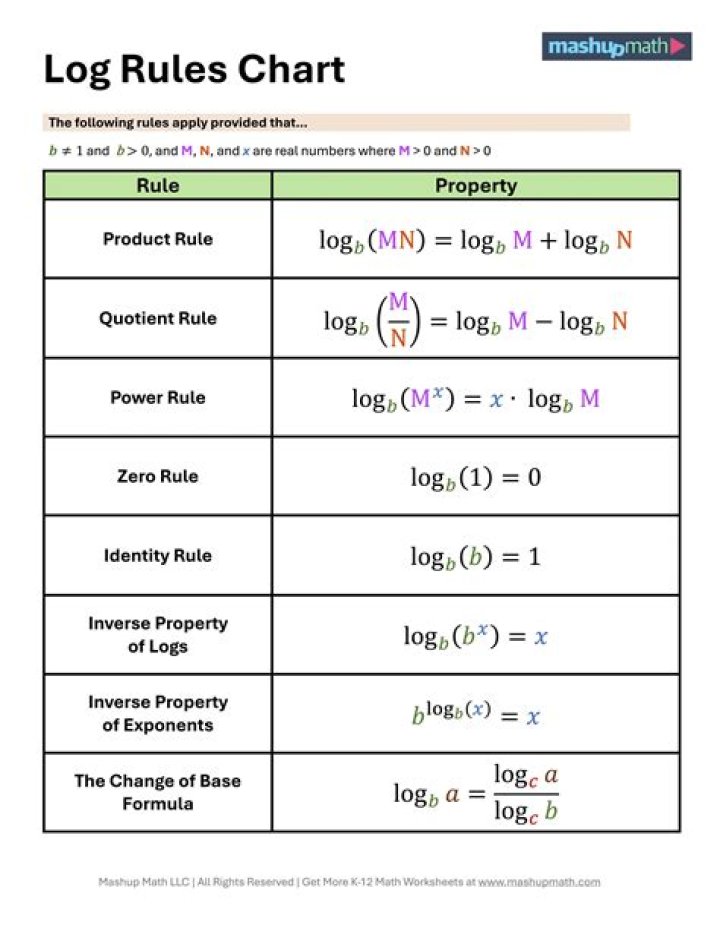
I have a simple question: in differential equations, it has been common in several of my homework problems to raise a base $e$ to the power of both sides of an equation to get variables out of natural log functions.
My question is what happens if you have a zero term? For example:
$$ ln(x) + ln(y) = z $$ is equivalent to $$ e^{ln(x)} + e^{ln(y)} = e^z $$
which simplifies to $$ x + y = e^z $$
But what happens if $y=1$?
$$ ln(x) + ln(1) = z $$ $$ ln(x) + 0 = z $$
At this point, if you removed zero from the equation and then raised both sides by $e$, you would get $x = e^z$ when it should be $x + 1 = e^z$. Thinking about it in this manner, one could claim the following:
$$ 1 + 0 = 1 $$ $$ e^1 + e^0 = e^1 $$ $$ e + 1 = e $$ $$ 1 = 0 $$ Is there some rule that explains why this algebra breaks down, and when it is wrong to raise both sides of an equation by $e$? This thought experiment is obviously incorrect, but in my first example, it is incorrect if you don't include zero in your raising-by-e operation.
$\endgroup$ 31 Answer
$\begingroup$First of all, there's an algebra error: When you raise $\ln(x) + \ln(1) = z$ into the exponent, you should have $x$ times $1 = z$, not $x+1 = z$.
That out of the way, this is actually an interesting question and I think it's worth thinking about a little more carefully. What does it mean when we "do the same thing to both sides"? It means this:
If the first equation is true, then the second equation must be true.
So, for instance, if $x+1=z$, then $x = z-1$. In other words, if there are numbers $x$ and $z$ such that the first equation is true, then the same numbers work for the second equation.
To your question, then --- If two numbers are equal, then raising $e$ to those numbers will produce equal numbers.
However, we must be careful, because sometimes "doing the same thing to both sides" actually loses information. For instance, consider the equation $x^2 = 1$. What happens when we take the logarithm of both sides? $2\ln(x) = \ln(1) = 0$. So we conclude that $\ln(x) = 0$, i.e., $x=1$, right? Uh-oh, what about the other solution, $x=-1$?
Problem: we have lost information in taking the logarithm. That is, in taking a logarithm, we have introduced the additional assumption that the argument of the logarithm is positive. So the instant where we lost information was when we went from $\ln(x^2)$ to $2\ln(x)$.
Since we can put any number into the exponential function and it is injective, we lose no information in "exponenting" both sides of an equation. However, in other situations -- such as taking the logarithm of both sides, or taking the square root of both sides, of on equation -- it is worth double-checking that you're not accidentally losing any solutions.
$\endgroup$ 0