Prime factorization of 1
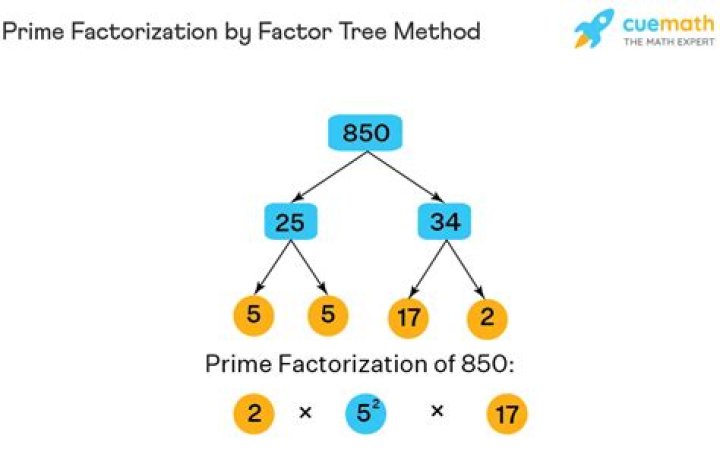
Fundamental Theorem of Arithmetic says every positive number has a unique prime factorisation. Question: If 1 is neither prime nor composite, then how does it fit into this theorem?
$\endgroup$ 35 Answers
$\begingroup$Let us remember that an empty product is always 1. Hence, 1 has the empty product as its prime factorization. This product is vacuously a unique product of primes.
$\endgroup$ 3 $\begingroup$It has (uniquely!) zero prime factors.
$\endgroup$ $\begingroup$I think you have simply misinterpreted the theorem. It should be stated as "...every positive number greater than one has a unique prime factor." .c.f.
$\endgroup$ 1 $\begingroup$The OP hasn't misinterpreted the theorem. Every nonzero integer can be written as a product of primes.(GTM84 P.3) Just the exponents are all zeros...
$\endgroup$ 2 $\begingroup$You need to change the theorem because anything that works for this contradicts the theorem. Any natural number greater than 1 can be written as a product of prime factors.
$\endgroup$