Powershell Script to Export all Devices in Device Manager as tree or list?
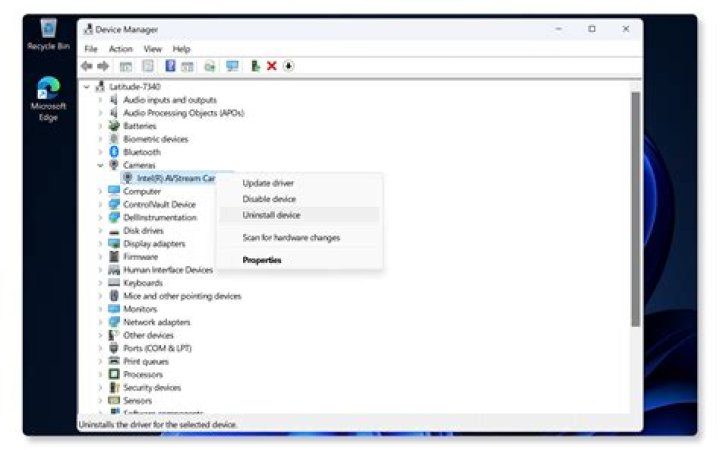
With former Windows versions, it was possible to print the information from the Device Manager, but it does not seem possible to do this with Windows 7 any longer.
I am looking for a Powershell script that exports all devices that also appear in Device Manager to a text file, and optionally creating it in a tree-like Device Manager type of view if possible.
This would be so helpful in many cases, but I haven't found anything like this from what research I've done.
03 Answers
Powershell Script to export all Devices in Device Manager
I am looking for a Powershell script that exports all devices that also appear in Device Manager to a text file, and optionally creating it in a tree-like Device Manager type of view if possible.
I just tested this with Windows 7 and it seems to work just fine from what I could tell, so here's a PowerShell module you can import and then use to get the device detail you need plus some.
An example syntax below as well to put to a text file which you requested. Just plug in your syntax and then put the | Out-File -Append -Force "C:\path\FileListName.txt" command to the end of it with your file location to put in a text file for later review ().
EXAMPLE
Get-Device | Sort-Object -Property Name | ft Name, DriverVersion, DriverProvider, IsPresent, HasProblem -AutoSize | Out-File -Append -Force "C:\path\FileListName.txt"Import-Module Note
If you have trouble with the import, just download the ZIP file, extract or copy the Release folder from within it to your desktop temporarily, and then use the explicit path import syntax to point to the psd1 file:Import-Module C:\Users\<username>\Desktop\Release\DeviceManagement.psd1 –Verbose
Source Links:
3Downloading and using the Device Management PowerShell Cmdlets
The Device Management PowerShell cmdlets are available at:
To download, follow the above link and click on the “Download” button. Save and extract the contents of the.zip file to a folder of your choice.
The next step is to import the module and start using the cmdlets! In order to do so, launch an instance of PowerShell and follow the below steps:
Importing the Cmdlet module:
Import-Module .\PSCmdlet.psd1 –Verbose
Listing Devices
All devices present on the system
Get-Device | Sort-Object -Property Name | ft Name, DriverVersion, DriverProvider, IsPresent, HasProblem -AutoSize
“Hidden” devices
Get-Device -ControlOptions DIGCF_ALLCLASSES | Sort-Object -Property Name | Where-Object -Property IsPresent -eq $false | ft Name, DriverVersion, DriverProvider, IsPresent, HasProblem -AutoSize
Disabled devices
Get-Device | Sort-Object -Property Name | Where-Object -Property ConfigurationFlags -Like 'DISABLED' | ft Name, InstanceId -AutoSize
You still can print/export from MsInfo32:
There is no such option to print the Device Manager Report in Windows 7 as we have it in Windows XP. However, you can try printing the Device Resources by getting into System Properties. Here is the step to get into System Properties.
Click on Start, type msinfo32 in the search box.
On the System Properties window, it will list the below options.
- Hardware Resources.
- Components.
- Software Environment.
- Select the option which you want to print.
Now, select the File option from the Menu Bar, then click on Export and then give a file name and select it.
- Try opening the file and then print it.
Also you can list all devices with this PowerShell onliner (no tree, though):
Get-WmiObject Win32_PNPEntity | Select Name, DeviceID Example output:
Name DeviceID
---- --------
Generic PnP Monitor DISPLAY\NEC66C0\5&3A115792&2&UID257
Motherboard resources ACPI\PNP0C02\1
Motherboard resources ACPI\PNP0C02\2
Intel(R) processor DRAM Controller - 0044 PCI\VEN_8086&DEV_0044&SUBSYS_1C771043&REV_18\3&11583659&0&00
Numeric data processor ACPI\PNP0C04\4&142DD991&0
Microsoft ACPI-Compliant Control Method Battery ACPI\PNP0C0A\0
High Definition Audio Bus PCI\VEN_1002&DEV_AA68&SUBSYS_AA681043&REV_00\4&179FD7D4&0&0108
Generic volume STORAGE\VOLUME\{5200DD0F-4FFD-11E5-8381-806E6F6E6963}#0000001900100000
Root Print Queue SWD\PRINTENUM\PRINTQUEUES
Volume Manager ROOT\VOLMGR\0000
Logicool USB (RX250) Optical Mouse USB\VID_046D&PID_C050\6&2582BEDF&0&2
Intel(R) 5 Series/3400 Series Chipset Family PCI Express Root Port 1 - 3B42 PCI\VEN_8086&DEV_3B42&SUBSYS_1C771043&REV_06\3&11583659&0&E0 Do this for Windows10:
Invoke-Command -ComputerName localhost { Get-WmiObject Win32_PNPEntity | Where { $_.PNPClass -notin "System","Net","Processor","SoftwareDevice","AudioEndpoint","BluetoothVirtual","Battery","Media","Volume","Modem","Camera","VolumeSnapshot","DiskDrive","Computer","HIDClass"}} | Sort-Object -Property PNPClass | Format-Table Name, Manufacturer, PNPClass, StatusComplete list of properties: