nginx displaying welcome page instead of application webpage
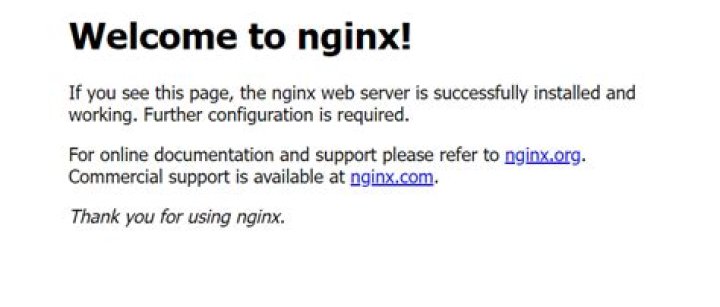
Welcome to nginx! If you see this page, the nginx web server is successfully installed and working. Further configuration is required.
For online documentation and support please refer to nginx.org. Commercial support is available at nginx.com.
Thank you for using nginx.
/etc/nginx/sites-enabled/default is only a directory
/etc/nginx/sites-available/default
server { listen 80 default_server; listen [::]:80 default_server; # SSL configuration # # listen 443 ssl default_server; # listen [::]:443 ssl default_server; # # Note: You should disable gzip for SSL traffic. # See: # # Read up on ssl_ciphers to ensure a secure configuration. # See: # # Self signed certs generated by the ssl-cert package # Don't use them in a production server! # # include snippets/snakeoil.conf; root /var/www/html; # Add index.php to the list if you are using PHP index index.html index.htm index.nginx-debian.html; server_name _; location / { # First attempt to serve request as file, then # as directory, then fall back to displaying a 404. try_files $uri $uri/ =404; } # pass the PHP scripts to FastCGI server listening on 127.0.0.1:9000 # #location ~ \.php$ { # include snippets/fastcgi-php.conf; # # # With php7.0-cgi alone: # fastcgi_pass 127.0.0.1:9000; # # With php7.0-fpm: # fastcgi_pass unix:/run/php/php7.0-fpm.sock; #} # deny access to .htaccess files, if Apache's document root # concurs with nginx's one # #location ~ /\.ht { # deny all; #}
}
# Virtual Host configuration for example.com
#
# You can move that to a different file under sites-available/ and symlink that
# to sites-enabled/ to enable it.
#
#server {
# listen 80;
# listen [::]:80;
#
# server_name example.com;
#
# root /var/www/example.com;
# index index.html;
#
# location / {
# try_files $uri $uri/ =404;
# }
#}
server { # SSL configuration # # listen 443 ssl default_server; # listen [::]:443 ssl default_server; # # Note: You should disable gzip for SSL traffic. # See: # # Read up on ssl_ciphers to ensure a secure configuration. # See: # # Self signed certs generated by the ssl-cert package # Don't use them in a production server! # # include snippets/snakeoil.conf; root /var/www/html; # Add index.php to the list if you are using PHP index index.html index.htm index.nginx-debian.html; server_name iitians.xyz # managed by Certbot location / { # First attempt to serve request as file, then # as directory, then fall back to displaying a 404. try_files $uri $uri/ =404; } # pass the PHP scripts to FastCGI server listening on 127.0.0.1:9000 # #location ~ \.php$ { # include snippets/fastcgi-php.conf; # # # With php7.0-cgi alone: # fastcgi_pass 127.0.0.1:9000; # # With php7.0-fpm: # fastcgi_pass unix:/run/php/php7.0-fpm.sock; #} # deny access to .htaccess files, if Apache's document root # concurs with nginx's one # #location ~ /\.ht { # deny all; #} listen [::]:443 ssl ipv6only=on; # managed by Certbot listen 443 ssl; # managed by Certbot ssl_certificate /etc/letsencrypt/live/ # managed by Certbot ssl_certificate_key /etc/letsencrypt/live/ # managed by Certbot include /etc/letsencrypt/options-ssl-nginx.conf; # managed by Certbot ssl_dhparam /etc/letsencrypt/ssl-dhparams.pem; # managed by Certbot
}
server { if ($host = ) { return 301 } # managed by Certbot if ($host = iitians.xyz) { return 301 } # managed by Certbot listen 80 ; listen [::]:80 ; server_name iitians.xyz return 404; # managed by Certbot
}
nginx.conf
user www-data;
worker_processes auto;
pid /run/nginx.pid;
events { worker_connections 768; # multi_accept on;
}
http { ## # Basic Settings ## sendfile on; tcp_nopush on; tcp_nodelay on; keepalive_timeout 65; types_hash_max_size 2048; # server_tokens off; # server_names_hash_bucket_size 64; # server_name_in_redirect off; include /etc/nginx/mime.types; default_type application/octet-stream; ## # SSL Settings ## ssl_protocols TLSv1 TLSv1.1 TLSv1.2; # Dropping SSLv3, ref: POODLE ssl_prefer_server_ciphers on; ## # Logging Settings ## access_log /var/log/nginx/access.log; error_log /var/log/nginx/error.log; ## # Gzip Settings ## gzip on; gzip_disable "msie6"; gzip_static on; # gzip_vary on; # gzip_proxied any; # gzip_comp_level 6; # gzip_buffers 16 8k; # gzip_http_version 1.1; # gzip_types text/plain text/css application/json application/javascript text/xml application/xml application/xml+rss text/javascript; server { # If your host is not IPv6 ready use listen 80; here. # Add ipv6only=off to your listen directive that has default_server. # Or this one if this is your only vhost. Do not add it to both! listen [::]:80; server_name iitians.xyz; location / { return 301 } } # Redirect to server { listen [::]:443 ssl; # Same rules as for listen [::]:80 apply. server_name location / { return 301 } # SSL setup # This file should also include any necessary intermediate certificates. # For example for StartSSL that would be # For Let's Encrypt use /etc/letsencrypt/live/ # and /etc/letsencrypt/ ssl_certificate /etc/letsencrypt/live/ ssl_certificate_key /etc/letsencrypt/live/ # Taken from # You might want to make these global # generate with openssl dhparam 2048 > /path/to/dhparam.pem ssl_dhparam /etc/letsencrypt/ssl-dhparams.pem; ssl_protocols TLSv1 TLSv1.1 TLSv1.2; ssl_ciphers 'ECDHE-RSA-AES128-GCM-SHA256:ECDHE-ECDSA-AES128-GCM-SHA256:ECDHE-RSA-AES256-GCM-SHA384:ECDHE-ECDSA-AES256-GCM-SHA384:DHE-RSA-AES128-GCM-SHA256:DHE-DSS-AES128-GCM-SHA256:kEDH+AESGCM:ECDHE-RSA-AES128-SHA256:ECDHE-ECDSA-AES128-SHA256:ECDHE-RSA-AES128-SHA:ECDHE-ECDSA-AES128-SHA:ECDHE-RSA-AES256-SHA384:ECDHE-ECDSA-AES256-SHA384:ECDHE-RSA-AES256-SHA:ECDHE-ECDSA-AES256-SHA:DHE-RSA-AES128-SHA256:DHE-RSA-AES128-SHA:DHE-DSS-AES128-SHA256:DHE-RSA-AES256-SHA256:DHE-DSS-AES256-SHA:DHE-RSA-AES256-SHA:AES128-GCM-SHA256:AES256-GCM-SHA384:AES128:AES256:AES:!aNULL:!eNULL:!EXPORT:!DES:!RC4:!MD5:!PSK'; ssl_session_timeout 5m; ssl_prefer_server_ciphers on; ssl_session_cache shared:SSL:50m; } # Actual proxy server { listen [::]:443 ssl; # Same rules as for listen [::]:80 apply. server_name root /home/diaspora/diaspora/public; # Configure maximum picture size # Note that Diaspora has a client side check set at 4M client_max_body_size 5M; client_body_buffer_size 256K; # SSL setup # This file should also include any necessary intermediate certificates. # For example for StartSSL that would be # For Let's Encrypt use /etc/letsencrypt/live/ # and /etc/letsencrypt/ ssl_certificate /etc/letsencrypt/live/ ssl_certificate_key /etc/letsencrypt/live/ # Taken from # You might want to make these global # generate with openssl dhparam 2048 > /path/to/dhparam.pem ssl_dhparam /etc/letsencrypt/ssl-dhparams.pem; ssl_protocols TLSv1 TLSv1.1 TLSv1.2; ssl_ciphers 'ECDHE-RSA-AES128-GCM-SHA256:ECDHE-ECDSA-AES128-GCM-SHA256:ECDHE-RSA-AES256-GCM-SHA384:ECDHE-ECDSA-AES256-GCM-SHA384:DHE-RSA-AES128-GCM-SHA256:DHE-DSS-AES128-GCM-SHA256:kEDH+AESGCM:ECDHE-RSA-AES128-SHA256:ECDHE-ECDSA-AES128-SHA256:ECDHE-RSA-AES128-SHA:ECDHE-ECDSA-AES128-SHA:ECDHE-RSA-AES256-SHA384:ECDHE-ECDSA-AES256-SHA384:ECDHE-RSA-AES256-SHA:ECDHE-ECDSA-AES256-SHA:DHE-RSA-AES128-SHA256:DHE-RSA-AES128-SHA:DHE-DSS-AES128-SHA256:DHE-RSA-AES256-SHA256:DHE-DSS-AES256-SHA:DHE-RSA-AES256-SHA:AES128-GCM-SHA256:AES256-GCM-SHA384:AES128:AES256:AES:!aNULL:!eNULL:!EXPORT:!DES:!RC4:!MD5:!PSK'; ssl_session_timeout 5m; ssl_prefer_server_ciphers on; ssl_session_cache shared:SSL:50m; # Proxy if requested file not found try_files $uri @diaspora; location /assets/ { expires max; add_header Cache-Control public; } # Camo support #location /camo/ { # proxy_redirect off; # proxy_pass # break; #} location @diaspora { proxy_set_header X-Real-IP $remote_addr; proxy_set_header X-Forwarded-For $proxy_add_x_forwarded_for; proxy_set_header X-Forwarded-Proto https; proxy_set_header Host $http_host; proxy_redirect off; proxy_pass } } # Proxy destination # Add as many server directives as you want # Also takes a socket, like unix:/path/to/some/socket.sock upstream diaspora_server { server unix:/home/diaspora/diaspora/tmp/diaspora.sock; } # Camo support #upstream camo { # server 127.0.0.1:8081; #} ## # Virtual Host Configs ## include /etc/nginx/conf.d/*.conf; include /etc/nginx/sites-enabled/*;
}
#mail {
# # See sample authentication script at:
# #
#
# # auth_http localhost/auth.php;
# # pop3_capabilities "TOP" "USER";
# # imap_capabilities "IMAP4rev1" "UIDPLUS";
#
# server {
# listen localhost:110;
# protocol pop3;
# proxy on;
# }
#
# server {
# listen localhost:143;
# protocol imap;
# proxy on;
# }
#}