Moment of inertia
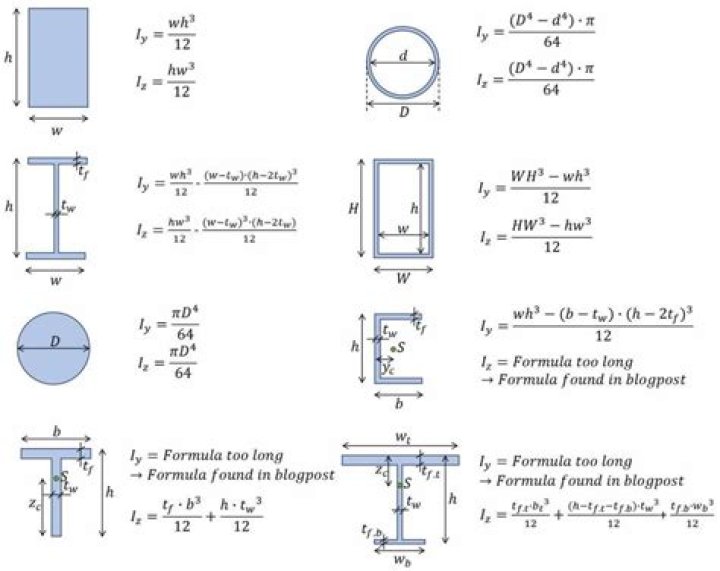
I want to find moment of inertia of thin circular loop of radius $R$ and mass $m.$
The moment of inertia of the ring is in relation to the $x$ and $z$ axes (mass is distributed in the $xy$ plane, and the axis of rotation is the $z$ axis, for one calculation, and the $x$ axis for the other.)
$m = 2\pi R\lambda$
$C=\{(x,y,z)\in\mathbb{R}^3: x^2+y^2=R^2, z=0\}$
$$I_z=\lambda \oint_C(x^2+y^2)\,ds\; \text{and}\; I_x=\lambda\oint_C(y^2+z^2)\,ds$$
$\lambda$ is a constant.
Already done:$$I_x=\int_{0}^{2\pi}y^2\cdot \lambda r\, d\theta ,\ I_y=\int_{0}^{2\pi}x^2\cdot \lambda r \,d\theta \; \text{and}\; I_z=\int_{0}^{2\pi}\big(x^2+y^2\big)\cdot \lambda r \,d\theta=I_x+I_y,$$
where $x=r\cos(\theta)$ and $y=r\sin(\theta)$ and $\lambda$ is the linear density.
How I take it from there?
$\endgroup$ 72 Answers
$\begingroup$Without doing the integration, notice first that $I_x+I_y=I_z$. Also, $I_x=I_y$ due to symmetry, so $I_x=I_y=\frac{1}{2}I_z$. But for $I_z$, every part of the ring is at the same distance $R$ from the axis of rotation, so $I_z=mR^2$. This gives $I_x=I_y=\frac12mR^2$.
$\endgroup$ $\begingroup$So everything looks good so far:\begin{align*} I_x&=\lambda\int_{0}^{2\pi}y^2r\, d\theta\\ &=\lambda\int_{0}^{2\pi}r^2\sin^2(\theta)\,r\, d\theta\\ &=\lambda r^3\int_{0}^{2\pi}\sin^2(\theta)\, d\theta\\ &=\frac{m}{2\pi r}\,r^3\,\pi\\ &=\frac{mr^2}{2}, \end{align*}as required. You can substitute in similarly for the $I_z$ integral and you should get the right result.
$\endgroup$