Limit of infinite sum (Taylor series)
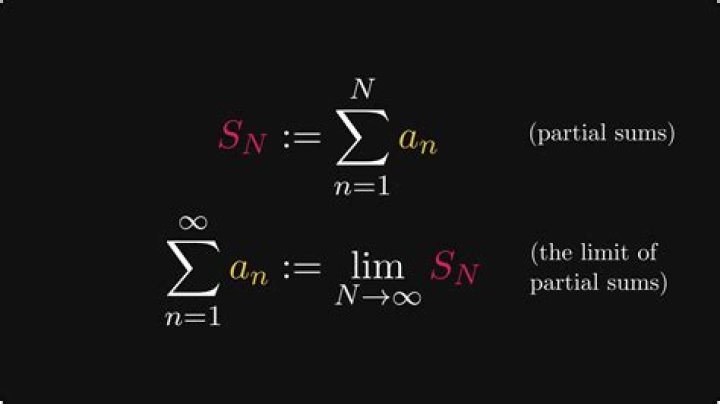
Let's say I want to show $$ \lim_{x \to \infty} e^{-x} = 0 $$ using Taylor series. I can expand $$ e^{-x} = \sum_{k=0}^\infty \frac{(-x)^k}{k!} $$ so I've got to consider $$ \lim_{x\to\infty}\sum_{k=0}^\infty \frac{(-x)^k}{k!}. $$
How do I actually show this is equal to $0$?
My first thought is to bound it in a squeeze theorem kind of way, but $$ \sum_{k=0}^\infty \left\vert\frac{(-x)^k}{k!}\right\vert = \sum_{k=0}^\infty \frac{x^k}{k!} = e^x \to \infty $$ as $x \to \infty$ so that doesn't help.
This sum is absolutely convergent so I can exchange the limit and sum, but that also doesn't help as $\lim_{x \to \infty} x^k = \infty$ .
How can I directly show this limit using this infinite series? I'd also like something that applies in general for these sorts of Taylor series evaluations, rather than something relying on a unique property of the exponential function. In general I've got a more complicated series $f(x) = \sum_{k=0}^\infty a_kx^k$ that I want to find $\lim_{x \to \infty} f(x)$ for, but when I tried to do this simple case I got stuck so I suspect I'm missing some basic facts about working with sums and limits like these.
$\endgroup$ 32 Answers
$\begingroup$You say you need to does this by using that series. Here's one way: \begin{align} & \sum_{n=0}^\infty \frac {(-x)^n}{n!} \cdot\sum_{m=0}^\infty \frac{x^m}{m!} \\[10pt] = {} & \sum_{n=0}^\infty\left( \frac {(-x)^n}{n!} \cdot\sum_{m=0}^\infty \frac{x^m}{m!} \right) & & \text{This can be done because the second sum} \\ & & & \text{does not depend on $n.$} \\[10pt] = {} & \sum_{n=0}^\infty\sum_{m=0}^\infty \left( \frac {(-x)^n}{n!}\cdot\frac{x^m}{m!} \right) & & \text{This can be done because the first fraction} \\ & & & \text{does not depend on $m.$} \\[10pt] = {} & \sum_{p=0}^\infty \left( \sum_{\{\,(m,\,n)\,:\,m+n=p\,\}} \frac {(-x)^n}{n!} \cdot\frac{x^m}{m!} \right) & & \text{(The same terms in a different order.)} \\[10pt] = {} & \sum_{p=0}^\infty \sum_{n=0}^p \frac {(-x)^n}{n!} \cdot\frac{x^{p-n}}{(p-n)!} \\[10pt] = {} & \sum_{p=0}^\infty \sum_{n=0}^p \frac 1 {p!} \binom p n (-x)^n x^{p-n} \\[10pt] = {} & \sum_{p=0}^\infty \left( \frac 1 {p!} \sum_{n=0}^p \binom p n (-x)^n x^{p-n} \right) & & \text{This can be done because that fraction} \\ & & & \text{does not change as $n$ goes from $0$ to $p.$} \\[10pt] = {} & \sum_{p=0}^\infty \frac 1 {p!} \big((-x)+x\big)^p & & \text{by the binomial theorem} \\[10pt] = {} & \sum_{p=0}^\infty \frac{0^p}{p!} \\[10pt] = {} & 1 + 0 + 0 + 0 + \cdots = 1. \end{align} Therefore the two series we started with are reciprocals of each other.
The second series clearly is everywhere positive and everywhere increasing and approaches $+\infty$ as $x\to+\infty.$
Therefore the first series is everywhere positive and everywhere decreasing and approaches $0$ as $x\to-\infty.$
$\endgroup$ 1 $\begingroup$It might be easier to show that $\lim_{x \to \infty} e^x = \infty$ and then since $e^x e^{-x} = 1$ we can conclude that $\lim_{x \to \infty} e^{-x} = 0$.
$\endgroup$ 1