Is the value of $\pi$ in 2d the same in 3d? [closed]
I am starting with my question with the note "Assume no math skills". Given that, all down votes are welcomed. (At the expense of better understanding of course!)
Given my first question: What is meant by the perimeter of a Sector
- Why is the value of $\pi$ not exactly $3$? why is it $3.14$.......... or a fraction $\frac{22}{7}$?
- Is the value of $\pi$ of $3.14$... or $\frac{22}{7}$ the same as for $3$ dimensions?
2 Answers
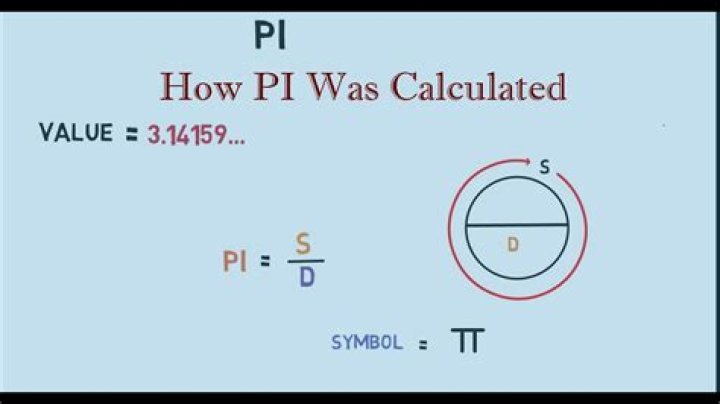
$\begingroup$There are several ways to define $\pi$, but whichever you choose it is a number that happens to be irrational (it's not equal to any fraction, although some fractions are close). It does represent the ratio between a circle's circumference and diameter for any circle (but not for spheres, squares, or other shapes).
With regards to your first question, a sector is a part of a circle, like a slice of pie (the food). Its perimeter consists of a round bit on the outside, and two straight bits toward the center.
$\endgroup$ $\begingroup$I'm not exactly sure what you mean by the value of $ \pi $ for 3 dimensional applications. $ \pi $ is a constant value - it is always equal to $ 3.1415 \ldots $.
Of course formulas don't always translate the same from 2 dimensional to 3 dimensional. For example, the area of a circle is $ \pi r^2 $ but the volume contained within a sphere is $ \frac{4\pi}{3} r^3 $. You could almost say that $ \pi $ in 2 dimensional geometry is analogous to $ \frac{4\pi}{3} $ but then this causes fault in other places with $ \pi $, such as surface area.
$\endgroup$ 3