Is it possible to install a 64 bit OS on 32 bit PC?

I asked this in Unix and there suggested to ask it here.
I was answering a question on a Linux Facebook group where somebody asked if it was possible to install a 32 bit OS on 64 bit PC. My answer was:
It is absolutely possible to install a 32 bit OS on 64 bit PC. But it is impossible to install a 64 bit OS on 32 bit PC.
Well, then somebody replied to my comment:
It is not impossible, but it is not correct to do it.
So... is it really possible to install a 64 bit OS on a 32 bit PC?
95 Answers
The answer is really, really simple.
Technically, a "32-bits" PC, as you call it, would be a PC whose CPU supports 32-bit computing but does not support 64-bit computing.
For example, a PC with an Intel CPU that supports IA-32 but does not support EM64T or IA-64 would be a "32 bits" PC. Indeed you would not be able to install a 64-bit OS on such a PC.
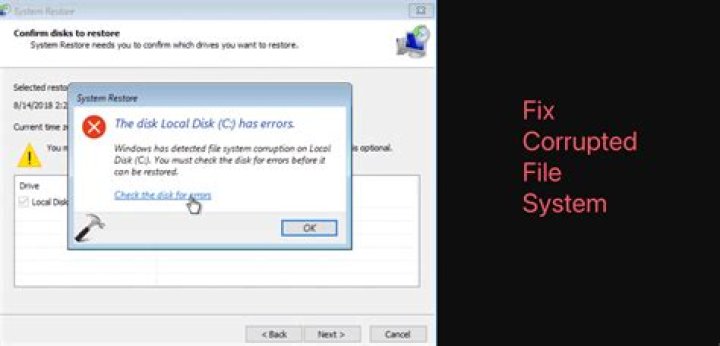
It isn't and will fail to get past to the installer - least from the small sample of OSes I've tried. These were done in virtualbox for ease of pretty screenshots.
I tried it with a few common 64 bit OSes - Windows 10 (I had build 1511 lying around)
Booting into an existing install throws a very similar failure, asking for a PAE enabled processor.
And Windows 7
Maybe its not just Windows.
Lets try a Ubuntu 16.04 livecd
Pretty sure for any pure 64 bit OS, you wouldn't get past the initial stages of install disk booting. While I didn't test it extensively switching a installed 64 bit system to a 32 bit host is also likely to end badly.
0You can manage to install it (with some hacking), but it would be useless, because it would not boot. So you can technically, but I wouldn't recommend doing it, because most people like to have a computer that can boot.
If your computer came with a 32-bit OS, and the 64-bit OS runs fine, then you should check your actual computer, because sometimes 64-bit computers come with 32-bit OS's.
4A 32 bit CPU can't run 64 bit code "by design". Consequently, it can't boot a 64 bit OS which by definition contains a 64 bit kernel.
OS installers are well aware of this fact so refuse to install a 64 bit OS on 32 bit hardware in the first place.
It is possible that the person who replied to your original comment has encountered a 64-bit OS (presumably meaning one that uses either memory beyond that is addressable beyond 32-bit protected mode or uses 64-bit registers) that installs and boots on processors restricted to 32-bits of memory or uses wider hardware registers. The last section gives a real example of installation of 64-bit OS on 32-bit hardware. The intermediate sections explain why not only can such an OS be installed, it can even be used (in theory).
Technical details
There are two main things that one might expect in a 64-bit OS. The first is memory addressable beyond 4GiB. Since BIOS-based 64-bit machines boot into 16-bit (AKA real) mode, one can write an OS that jumps in and out of long, 64-bit memory mode for certain operations (see, for example, how one can leave 64-bit mode). Or, in a mono tasking environment, jump into long mode for certain programs. It was common for 32-bit DOS programs to enter and leave 32-bit mode via a DOS extender in order to run. A scientific computing platform may also do something similar to reap the performance benefits of running 32-bit code (yes! 32-bit code can be faster than 64-bit code!) except where necessary.
The second thing that one might expect in a 64-bit OS is 64-bit registers. But one can easily stay in a low bit mode and switch to higher-bit modes as necessary. One can have a single program that contains a mixture of 16-, 32-, and 64-bit register code. To switch register sizes, one uses the operand size override prefix (opcode prefixes 0x66 and 0x67), although this last detail is usually taken care of by a compiler and invisible to most programmers.
Theoretical example
One could write an OS that only uses 64-bits in some parts of the OS. Such an OS is easily within the realm of imagination. A 32-bit OS being ported to 64-bits may start by only making certain parts of the OS 64-bits (thus making it a 64-bit OS). Suppose the audio driver is the first thing ported; such an OS could run normally until one plays an audio file. I'm guessing this happens in the hobbyist OS scene with some regularity as someone wants to do a bit of experimentation with 64-bits or wishes to enhance the speed of a particular set of operations on the OS.
Real example of installing 64-bit OS on 32-bit machine
A real world example of a mixture of 64-bit and 32-bit code is MacOS (versions ~10.5-10.7). On a 64-bit Intel Mac, these versions of MacOS can boot to the 32-bit mode kernel and run 64-bit applications 64-bit userspace OS code. On a 32-bit machine, the computer still boots. However, instead of crashing the computer when trying to run 64-bit-only applications, MacOS simply refuses to run the application.
Note that the same disk OS is installed on both 32-bit and 64-bit Macs. You can install MacOS on a 32-bit Mac, remove the disk and place it into a 64-bit Mac and boot the 64-bit kernel. And, of course, the Hackintosh scene proves that you can install MacOS on a generic 32-bit machine.