Identity Element of Subtraction (Solution Verification)
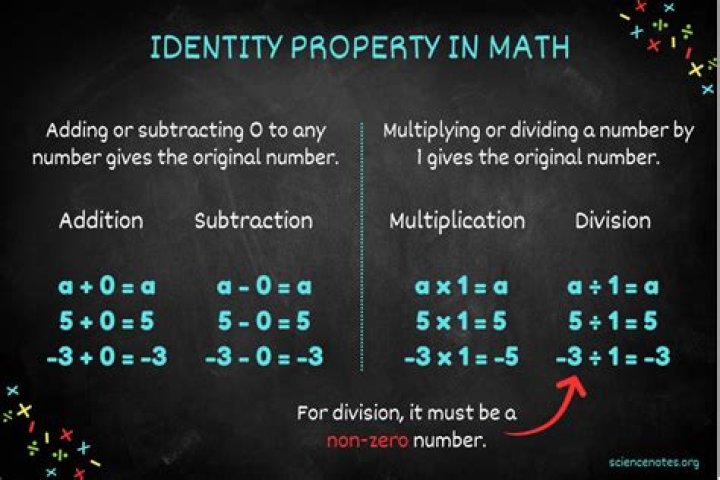
This is about an exercise from Norman L. Biggs Discrete Mathematics. One is asked to check which binary operations are valid when $*$ represents the usual $-$ of arithmetic. Now, Biggs says that $-$ has an identity value. But, using the definition:
G3: There is an element $e \in G$ such that $$e*x=x*e=x$$ for all $x \in G$. Now, $e-x=x \iff e=2x$ and $x-e=x \iff e=0$. As $2x≠0$ for all $x \in G$
I answered that subtraction did not have an identity element. What am I missing?
$\endgroup$ 12 Answers
$\begingroup$You are not missing anything.
You are correct that there is no identity element $\,e\,$ such that for all $\,x\,$ (in most sets), we have that $$e - x = x - e = x.$$
As Federica Maggioni states, "$0$" is a "right-identity" for subtraction, satisfying:
$$\; x - 0 = x,$$ with subtraction defined as we know it.
But this is not an identity in the sense that we've defined identity $e \in G$ for a binary operator on $G$: $$e * x = x*e = x$$ for all $x$ in a set $G$ on which $*$ is defined.
$\endgroup$ 1 $\begingroup$Subtraction is neither associative nor commutative, and there is no element $e$ such that for all $x$: $$e -x = x - e = x$$
However, there is a right-identity, namely $0$.
$\endgroup$