How to use Wake-on-LAN on a computer in a network connected via VPN?
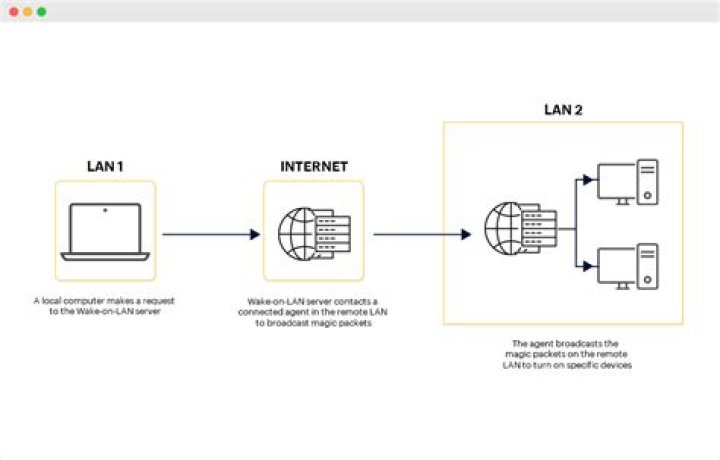
When a computer in Network-A (192.168.1.x) connects to a OpenVPN server in a remote Network-B (192.168.2.x), it can see/access all computers in this remote network.
There is one computer in Network-B which can be woken up using WOL. Sending a magic package to this computer from another device in Network-B is not problem, it wakes up immediatelly.
However, I would like to send the wake up request from a computer in Network-A. This does not work.
I know, that the magic package is broatcast within the local network. I assume that the package is only recieved on computers within Network-A (192.168.1.x) and does not reach coputers in Network-B (192.168.2.x). Is this correct?
Is it some how possible to send the wake request from Network-A to NetworkB?
11 Answer
In IPv4 you also have "subnet-directed broadcast". The last address of an IPv4 network is its broadcast address – from any other network, you can send packets to 192.168.2.255 and they will travel as unicast until they reach the 192.168.2.x network, then the router will convert them to broadcast.
Your WoL tool should have an option to specify the destination IP address.
Failing that, you could SSH into the OpenVPN server and run the WoL tool from there. Because the OpenVPN server is a member of NetworkB, it'll be able to directly broadcast the WoL magic packets.
I know, that the magic package is broatcast within the local network.
Usually it is, but that's not a specific requirement. The requirement is actually "Whatever it takes to get the packet to the computer's NIC".
For example, unicast is usually not an option because the computer is asleep, it cannot generally answer to ARP queries, so it's troublesome to send it unicast packets – often needing special configuration and/or root privileges. Broadcast is just the simple option that always works.
(Though sometimes NICs can recognize ARP queries and either respond to them autonomously – or at least wake the computer when it's being ARP'd, without the need for a magic packet. The latter is called "wake on pattern" and does lead to unwanted wakes.)
3