How to find the positive and negative roots of a function?
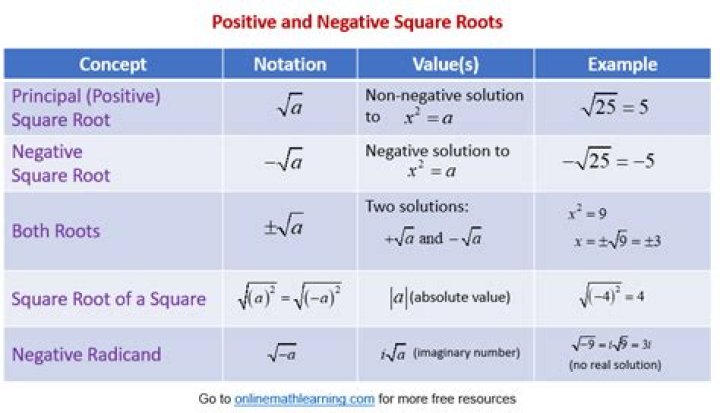
Iam trying to solve the following question:
Find all numbers $a$, such that the equation $x^2-ax-a = 0$ has one positive root and one negative root.
I've tried it already but I cannot seem to understand what the question is asking for, so how would I go about solving it? Also how do I find the positive and negative roots of a function in general?
$\endgroup$2 Answers
$\begingroup$You could use the fact that the product of the two roots is $-a$.
If they have different signs, their product has to be negative. That means $-a<0$.
Also two distinct roots means the discriminant is greater than $0$. This gives you $a^2+4a>0$.
Combining the two should give you the answer.
$\endgroup$ $\begingroup$Use the quadratic formula to solve for $x$. Use what is inside the square root to find the values of $a$ that give two values for $x$. (The contents of the square root, which is an expression in $a$, must be positive.)
Then for the value of $x$ that comes from subtracting the square root, solve the inequality that makes that negative. For the value of $x$ that comes from adding the square root, solve the inequality that makes that positive.
You now have three sets for the values of $a$. The one you want is the intersection of all three of those sets.
You do not need to "find the positive and negative roots of a function in general," just for this particular problem that uses a quadratic equation. That is much easier than the general problem.
$\endgroup$