How can a reuse an encrypted SSD?
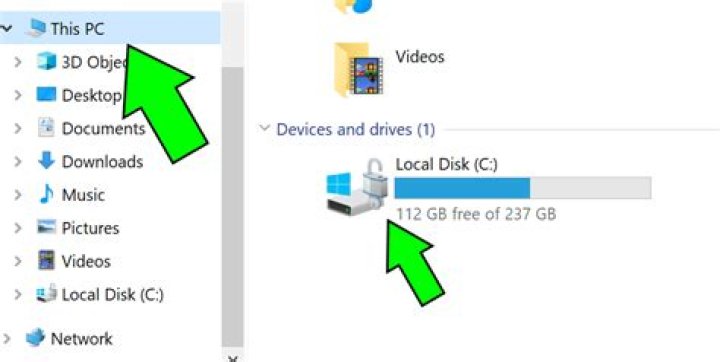
I bought a laptop on ebay that had a broken screen, didn't appear to have ever been opened before, and upon opening it, I found an SSD inside that I would like to format and use.
Gparted (and other programs including mkusb, and dd) report "Input/output error during read on /dev/sda". If I click to ignore these about ten times, then I can see it in the drives selection pop down selection box as totally unallocated. If I try to make a partition on the device, it says no partition table, create a partition table. If I do that, it hangs. I cannot write the first MB as suggested in this post (r/w errors) either with mkusb or dd.
The drive is an Intel opal SSD with a PSID on the label, so I thought it was a self-encrypting-drive (SED), but using sedutil-cli --scan, the drive is reported as not SED. When I try and boot up on the drive, it comes up with a lock and harddrive symbol and you can type a password. It gives you three tries, and then a hand with a slash/circle through it pops up and you have to shutdown and try again. It won't let you go to BIOS, or boot on another drive when it is connected to the SATA bus before booting. The way I got the sedutil-cli to work was to make a USB drive from an image from Drive Trust Alliance, then boot from it and put the Intel SSD in a USB enclosure, and connect it after booting from the image on a flash drive.
If I use the disk utility to check the SMART status, everything is fine. I am certain this drive is encrypted, but I haven't been able to discover even what encryption it is, or any way to format it for reuse.
Can anyone give me any hints? It seems such a waste to send this drive to the landfill, and buy a new one, just because I can't figure this out!
Thanks!
Here is some more data that might be useful:
$ sudo hdparm -I /dev/sda
[sudo] password for frohro:
/dev/sda:
ATA device, with non-removable media Model Number: INTEL SSDSC2BF180A4L Serial Number: CVDA341204U11802GN Firmware Revision: LSTi Transport: Serial, ATA8-AST, SATA 1.0a, SATA II Extensions, SATA Rev 2.5, SATA Rev 2.6, SATA Rev 3.0
Standards: Used: unknown (minor revision code 0xffff) Supported: 9 8 7 6 5 Likely used: 9
Configuration: Logical max current cylinders 16383 16383 heads 16 16 sectors/track 63 63 -- CHS current addressable sectors: 16514064 LBA user addressable sectors: 268435455 LBA48 user addressable sectors: 351651888 Logical Sector size: 512 bytes Physical Sector size: 4096 bytes Logical Sector-0 offset: 0 bytes device size with M = 1024*1024: 171705 MBytes device size with M = 1000*1000: 180045 MBytes (180 GB) cache/buffer size = unknown Nominal Media Rotation Rate: Solid State Device
Capabilities: LBA, IORDY(can be disabled) Queue depth: 32 Standby timer values: spec'd by Standard, no device specific minimum R/W multiple sector transfer: Max = 16 Current = 16 Advanced power management level: 254 DMA: mdma0 mdma1 mdma2 udma0 udma1 udma2 udma3 udma4 udma5 *udma6 Cycle time: min=120ns recommended=120ns PIO: pio0 pio1 pio2 pio3 pio4 Cycle time: no flow control=120ns IORDY flow control=120ns
Commands/features: Enabled Supported: * SMART feature set * Security Mode feature set * Power Management feature set * Write cache * Look-ahead * WRITE_BUFFER command * READ_BUFFER command * NOP cmd * DOWNLOAD_MICROCODE * Advanced Power Management feature set * 48-bit Address feature set * Mandatory FLUSH_CACHE * FLUSH_CACHE_EXT * SMART error logging * SMART self-test * General Purpose Logging feature set * 64-bit World wide name * WRITE_UNCORRECTABLE_EXT command * {READ,WRITE}_DMA_EXT_GPL commands * Segmented DOWNLOAD_MICROCODE * Gen1 signaling speed (1.5Gb/s) * Gen2 signaling speed (3.0Gb/s) * Gen3 signaling speed (6.0Gb/s) * Native Command Queueing (NCQ) * Host-initiated interface power management * Phy event counters DMA Setup Auto-Activate optimization Device-initiated interface power management * Software settings preservation Device Sleep (DEVSLP) unknown 78[10] * SMART Command Transport (SCT) feature set * SCT Write Same (AC2) * SCT Data Tables (AC5) * reserved 69[4] * Data Set Management TRIM supported (limit 1 block) * Deterministic read data after TRIM
Security: Master password revision code = 16385 supported enabled locked not frozen not expired: security count supported: enhanced erase Security level maximum 4min for SECURITY ERASE UNIT. 2min for ENHANCED SECURITY ERASE UNIT.
Logical Unit WWN Device Identifier: 55cd2e404b84ac1f NAA : 5 IEEE OUI : 5cd2e4 Unique ID : 04b84ac1f
Device Sleep: DEVSLP Exit Timeout (DETO): 20 ms (drive) Minimum DEVSLP Assertion Time (MDAT): 10 ms (drive)
Checksum: correct