Fundamental Theorem of Analysis: Help in understanding steps of proof.
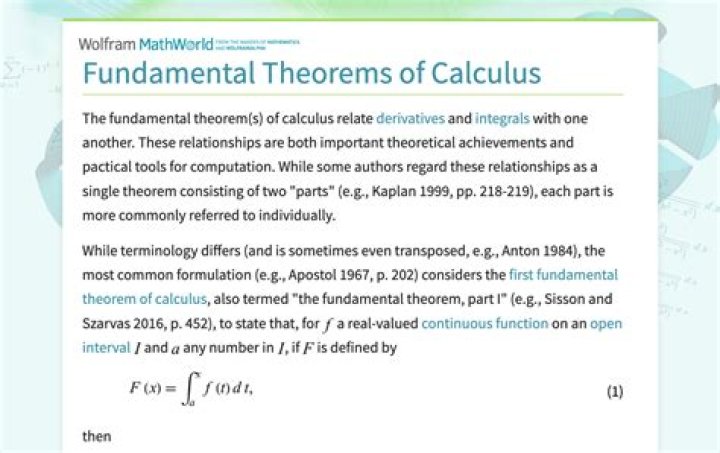
Statement (Fundamental Theorem of Analysis): Let $f: I \rightarrow \mathbb C$ be continuous on $I \subseteq \mathbb R$ and let $a \in I$. Define $$F(x) := \int^x_a f(t) \, dt, \ x\in I.$$ Then $F$ is differentiable in $I$ and $F^{'}(x) = f(x) \ \forall x \in I$.
Proof: Let $x_0$ be arbitrary. Suppose $x_0$ is an inner point of $I$ and $[x_0-r, x_0+r] \subseteq I$. For every $h \in \mathbb R: |h| \le r$ we have $$F(x_0+h)-F(x_0)=\int^{x_0+h}_a f(t) \,dt - \int^{x_0}_a f(t) \, dt = \int^{x_0+h}_{x_0} f(t) \,dt.$$
(Why is this true ? If $h < 0$ does the last integral even makes sense ?) (Also how can $F(x)$ be defined for $x < a$ ? - then the integral is undefined ?)
Now assume $h>0$.
Thus $$F(x_0+h)-F(x_0)-hf(x_0)= \int^{x_0+h}_{x_0} f(t)-f(x_0) \, dt$$ which imply $$|\frac {F(x_0+h)-F(x_0)} h -f(x_0)| \le \frac 1 h \int^{x_0+h}_{x_0} |f(t)-f(x_0)| dt.$$
Since $f$ is continuous we can choose $r\ge \delta >0: |f(y)-f(x_0)|\le \epsilon$ for $|y-x_0| \le \delta$ so $$|\frac {F(x_0+h)-F(x_0)} h -f(x_0)| \le \frac 1 h \int^{x_0+h}_{x_0} \epsilon \ dt = \epsilon$$
By similar reasoning one can conclude the same for $h < 0$ which imply $F(x)$ is differentiable. But I don't see how this is done for $h <0$ . Could someone please help me out.
$\endgroup$ 5 Reset to default