Fundamental group of Hawaiian earring
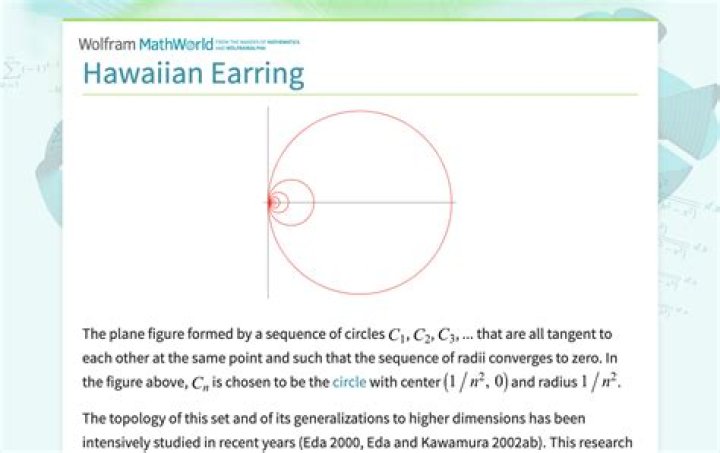
I am trying to understand how the fundamental group of the infinite shrinking wedge of circles is $G=\prod_{i=1}^\infty\mathbb{Z}$.
I understand that it is something more than $H=\bigoplus_{i=1}^\infty\mathbb{Z}$ because we can get more loops than $H$ admits because the radii of circles decrease, and continuity only requires we approach $0$ rather than terminate at $0$.
However, I feel like the fundamental group is still something more than $G$. Namely, we should be able visit previous circles with larger radii as long as these visits only occur a finite number of times (this groups operation is not pointwise multiplication but rather alternating letter weaving where consecutive letters from the same copy of $\mathbb{Z}$ are added together).
It could be that these two groups I'm considering are isomorphic, but I have no clue how to show that or if they even are. Thus my question is are these two groups isomorphic? or does the group I'm considering not represent the fundamental group of the infinite shrinking wedge of circles?
EDIT
I'm embarrassed to say that I've read an assertion that wasn't made in my source--- It merely says that the fundamental group of the wedge surjects onto $G$. Thus I'm asking if anyone does know the fundamental group of the infinite shrinking wedge?
$\endgroup$ 13 Answers
$\begingroup$It is a common misconception that there is no nice combinatorial description of the earring space (or other wild 1-dimensional spaces like the Sierpinski carpet or Menger curve for that matter). Once you get used to the construction, it is actually not too bad at all. I would argue that it is far more tractable than the homotopy groups of spheres. Moreover, this group has become quite important in infinite group theory since in many ways it is the non-abelian Specker group.
Pece is right that the way to deal with $\pi_1(H)$ is as a subgroup of an inverse limit of free groups. This representation of $\pi_1(H)$ is secretly use "shape theory." I give a friendly introduction to the earring group in the blog post:
In more recent blog posts I have walked step by step through De Smit's subtle argument that $\pi_1(H)$ is not free (which Pece references).
$\endgroup$ 1 $\begingroup$The infinite shrinking wedge of circles is usually called Hawaiian earring. (In fact, shrinking wedge doesn't quite describe what you want, as wedging does not care of the size of the circles : the topology is a [very simple] quotient of the disjoint union topology.)
In this article, one gives a description of $\pi_1(H)$ as a subgroup of the projective limit of the free groups on a finite set of generators. (In particular, the article aims to prove that $\pi_1(H)$ isn't free.)
$\endgroup$ $\begingroup$The fundamental group of the infinite shrinking wedge of circles is not equal to $G=\prod_{i=1}^\infty\mathbb{Z}$. Hatcher only makes the claim that $\pi_1(X)$ surjects onto $G$ and that $\pi_1(X)$ is therefore uncountable. The fundamental group of $X$ is definitely larger than $G$, but there is probably no nice representation of it.
$\endgroup$ 2