"Fully correlated" definition
Really sorry to be a noob, but I'm a programmer, not a mathematician, and all of my knowledge about statistics come from this book "Schaum's Outline of Theory and Problems of Probability, Random Variables, and Random Processes".
I'm implementing an UKF for target tracking using C++. Everything went well until an error about covariance matrix of state is not positive definite happened.
After a little research, I found this link Under what circumstance will a covariance matrix be positive semi-definite rather than positive definite? which almost answer everything I need.
Only one thing I don't understand: The answer says "This happens if and only if some linear combination of X is ‘fully correlated’". Can anyone explain for me what does "fully correlated" mean? And example would be great. I have search Google about its definition but there is no luck at all.
$\endgroup$ 12 Answers
$\begingroup$(I was the poster of the question to which the OP refers and I am heartily embarrassed by my distinct lack of clarity).
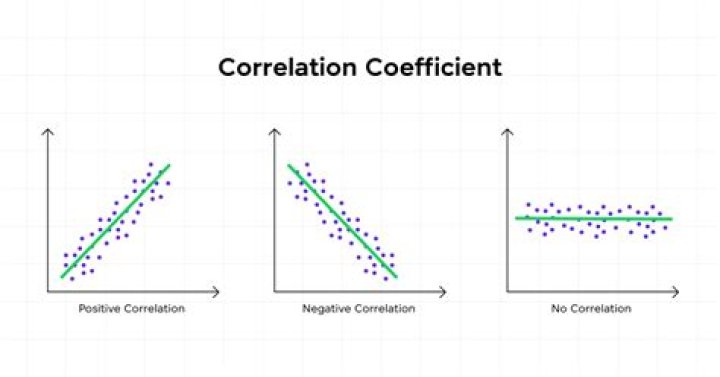
The intention was that the relationship is exactly linear and the correlation is 1 or -1.
That is:
$\rho_{i,j} = \frac{\sigma_{i,j}}{\sigma_i \sigma_j} = \pm 1$
where $\sigma_{i,j}$ is the covariance of elements $i$ and $j$ and ${\sigma_i}^2$ and ${\sigma_j}^2$ is the variance of $i$ and $j$ respectively. In all cases $i \ne j$, except for the scalar case which is covered in the original post.
There is the assumption that the random variable is multivariate normal, which is the an assumption of the (Unscented) Kalman-based estimators that are the subject of both the original question and this one.
I hope this doesn't cause past answers to be wrong!
$\endgroup$ 1 $\begingroup$I think this means that the relationship is exactly linear and the correlation is 1 or -1.
$\endgroup$ 12