Frenet-Serret Formulas for Arc Length and Regular Parametrization
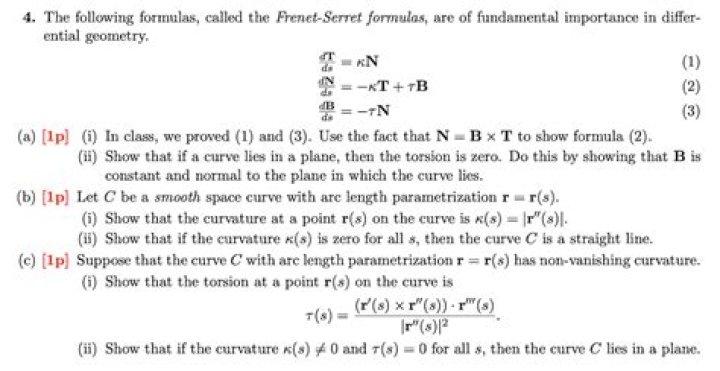
Frenet-Serret formulas for arc length parametrization are in matrix form where $\mathbf{ \widetilde T}(s)$, $\mathbf{ \widetilde N}(s)$, $\mathbf{ \widetilde B}(s)$ are unit tangent, normal, binormal vectors of a curve $\widetilde \alpha(s)$ of arc length parametrization as follows
$$\begin{bmatrix} \mathbf{ \widetilde T}'(s) \\ \mathbf{ \widetilde N}'(s) \\ \mathbf{ \widetilde B}'(s) \end{bmatrix} = \begin{bmatrix} 0 & \widetilde \kappa(s) & 0 \\ -\widetilde \kappa(s) & 0 & \widetilde \tau(s) \\ 0 & -\widetilde \tau(s) & 0 \end{bmatrix} \begin{bmatrix} \mathbf{ \widetilde T}(s) \\ \mathbf{ \widetilde N}(s) \\ \mathbf{ \widetilde B}(s) \end{bmatrix}$$
In O'neill book of "Elementary Diffetential Geometry" on page 67, Frenet-Serret formulas for regular parametrization are defined for $\alpha(t)$ arbitrary curve as such
$$\begin{bmatrix} \mathbf{ \widetilde T}'(t) \\ \mathbf{ \widetilde N}'(t) \\ \mathbf{ \widetilde B}'(t) \end{bmatrix} = \lVert \alpha(t)' \rVert \begin{bmatrix} 0 & \kappa(t) & 0 \\ -\kappa(t) & 0 & \tau(t) \\ 0 & -\tau(t) & 0 \end{bmatrix} \begin{bmatrix} \mathbf{ \widetilde T}(t) \\ \mathbf{ \widetilde N}(t) \\ \mathbf{ \widetilde B}(t) \end{bmatrix}$$
In the same book under the title of "Arbitrary-Speed Curves" on page 66 it gives an explanation for the reason of why $t$ (arbitrary) and $s$ (arc length) parametrizations differ by speed factor $\lVert \alpha(t)' \rVert$.
By using composite function property on the same page shown here, we can write,
$$\alpha(t)= \widetilde \alpha(s(t)) \tag{1}$$
Question: How can we derive Frenet-Serret formulas for arbitrary parametrization from the arc length parametrization through equation $(1)$?
$\endgroup$ 7 Reset to default