For which numbers $c$ is there a number $x$ such that $f(cx)=f(x)$?
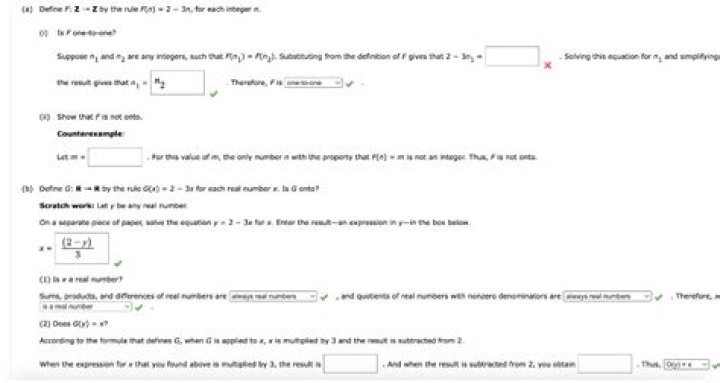
This is one exercise in Spivak's book that is bugging me for a while, first I thought that $c=1$, but there's a hint:
There are a lot more than you might think at first glance.
And here I'm stuck, yesterday I was studying complex numbers and then I thought I could use also $c=i^2$ and also $c=i^{\text{ even number}}$ but when evaluated, the result would be always the same, then I guess the reasoning is not valid. In despair, I even thought about $c=1^{n}$ where $n\in\{x:x\in \mathbb{R}\}$ but it would be the same number after all. I'm clueless on this and I'm aware that the answer may be something deeply stupid and trivial, but I can't figure it out.
EDIT: The mentioned exercise print:
1 Answer
$\begingroup$You need to find the values of $c$ such that $f(cx)=f(x)$ for some $x$. Well write out what this means: it means that
$$\dfrac{1}{1+cx} = \dfrac{1}{1+x}$$
Rearranging gives
$$cx=x$$
CAUTION! The temptation here is to divide through by $x$, in which case the only solution is $c=1$. But you need to find the values of $c$ for which some value of $x$ satisfies the equation. So what else might you be able to have?
When can you not divide through by $x$? Why can't you? What implications does this have for your equation? In this case, which values of $c$ still satisfy the equation?
$\endgroup$