Finding the exponential form of $z=1+i\sqrt{3}$ and $z=1+\cos{a}+i\sin{a}$.
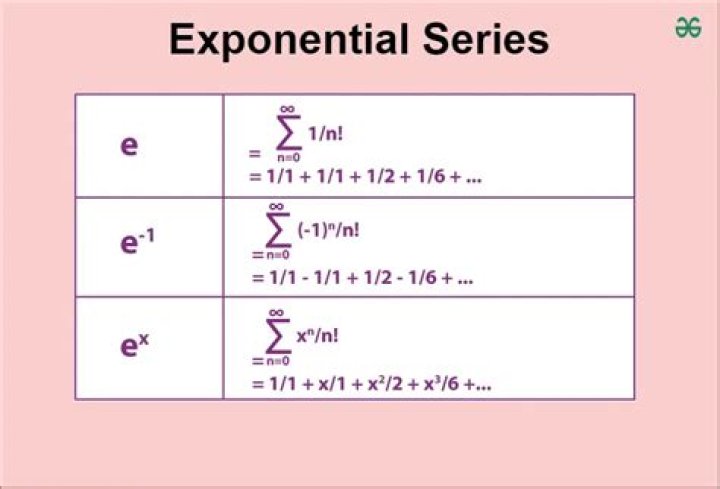
Here is what I have been able to accomplish:
For the first one I found that $|z|=z\bar{z}=2$ and $\theta=\tan^{-1}{\sqrt{3}}=\frac{\pi}{3}$. So we get $2e^{\frac{\pi}{3}i}$.
For the second one I have only been able to solve the following: $|z|=\sqrt{1+2\cos{a}}$. I'm stuck on how to treat the trig functions when converting to exponential form.
$\endgroup$ 23 Answers
$\begingroup$$$1+i\sqrt{3}=2\left(\dfrac{1}{2}+i\dfrac{\sqrt{3}}{2}\right)=2\left(\cos{\dfrac{\pi}{3}}+i\sin{\dfrac{\pi}{3}} \right)=2e^{{i\tfrac{\pi}{3}}}$$ The second expression is $$z=1+\cos{\alpha}+i\sin{\alpha}=2\cos^2{\dfrac{\alpha}{2}}+2i\sin{\dfrac{\alpha}{2}}\cos{\dfrac{\alpha}{2}} \\ =2\cos{\dfrac{\alpha}{2}}\left(\cos{\dfrac{\alpha}{2}}+i\sin{\dfrac{\alpha}{2}} \right)=2\cos{\dfrac{\alpha}{2}}\cdot e^{i{\tfrac{\alpha}{2}}}$$
$\endgroup$ $\begingroup$$z=2(\cos \pi/3+i\sin \pi/3)=2e^{i\pi/3}$
Next one $z=2\cos (a/2)(\cos a/2+i\sin a/2)=2\cos (a/2)e^{ia/2}$
$\endgroup$ $\begingroup$For your second $ \ z \ $, you will find the trig identities
$$\tan ( \frac{\theta}{2} ) \ = \ \frac{\sin \theta}{1 \ + \ \cos \theta} $$
and
$$\frac{1}{2} \cdot (1 + \cos 2 \theta) \ = \ \cos^2 \theta \ \Rightarrow \ \frac{1}{2} \cdot (1 + \cos \theta) \ = \ \cos^2 (\frac{\theta}{2})$$
useful...
$\endgroup$