Find the equation of a circle, given a point on it and a point where it is tangent to a given line
The given question is:
Find the equation of the circle that passes through point $(-3,-4)$ and touches the line $x-y+7=0$ at the point $(-5,2).$
What I did was:
Took the given points $(-5,2)$ and $(-3,-4)$ as the diameter of the circle and derived the equation using the 'formula for the equation of a circle when the end points of diameter are given' :-
$(x+5)(x+3) + (y+4)(y-2) = x^2+y^2+15x+2y+7 =0 .$
Then I affixed the equation of the line derived by the given points with a parameter so that I get the equation of any circle which would pass through the given points $(-5,2)$ and $(-3,-4) $:-
$$x^2+y^2+15x+2y+7+k(3x+y+13) = 0 \tag1 $$
I substituted the mid points $(-15-3k/2,-2-k/2)$ of (1) above equation to the line perpendicular to the given tangent because the mid points lie on that $(x+y+3=0) $ line. Then
$$(-15-3k/2) + (-2-k/2) + 3 = 0 = -15-3k-2-k+6 = 0 = -11 = 4k = k = -11/4$$
But when I substitute this value of 'k' to the equation (1) I get the wrong answer. So I tried using another method namely: finding the mid points of the required circle using simultaneous equations of the lines of perpendicular to the given tangent and the perpendicular of the line thru points (-5,2) and (-3,-4) and. That worked for me.
What I need to know
If the first method is inapplicable to the given question or what I am doing wrong there. Thanks in advance.
$\endgroup$ 45 Answers
$\begingroup$Let points (-5,2) and (-3,-4) as T and P respectively.
Assuming T and P as diametrically opposite points in a circle leads to the error.
At first you need to find center (h,k) of the circle.
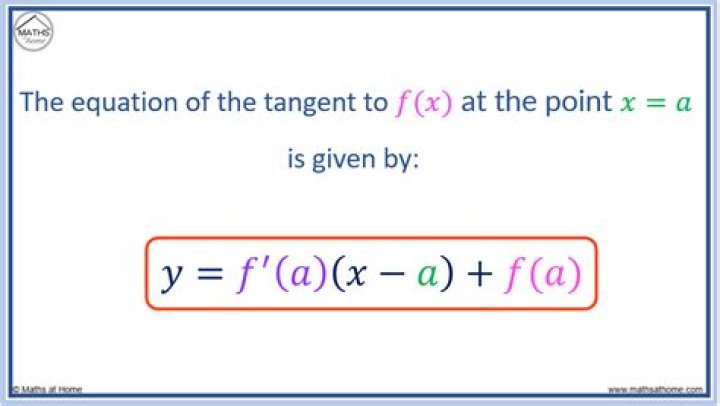
Tangent at T has slope 1, so the normal has a slope -1.
$$ \dfrac{(k-2)}{(h+5)} = -1 \dots (1*) $$
Perpendicular bisector of TP is given by
$$( k-2)^2 + (h+5)^2 =( k+4)^2 + (h + 3)^2 =( R^2) \dots (2*) $$
Solving (1*), (2*) and we have $$ h = -5/2, k =-1/2\dots (3*) $$
From (1*), (2*) $$ R^2 = (k-2)^2 + (h +5)^2 = 50/4 $$
Plug in above values into circle equation $$ (x-h)^2 + (y-k)^2 = R^2 \dots (4*) $$
$\endgroup$ $\begingroup$No don't take the points (-5,2) and (-3,-4) as the diameter of the circle, this might be a chord.
The center would always be at the perpendicular bisector of two chord or one chord and a tangent.
That's why first one is wrong and second one right.
$\endgroup$ 0 $\begingroup$Let $O(\alpha, \beta)$ be the center of the circle, $A=(-3,-4)$ and $B=(-5,2)$. Then use the following information to find $\alpha, \beta$.
$1$) The slope of the radius $OB$ is $-1$.
$2$)$OA=OB$.
$\endgroup$ $\begingroup$the mid point of the chord connecting the points $(-5, 2)$ and $(-3, -4)$ is $(-4, -1)$ and the chord has slope $\frac{-4-2}{-3 + 5} = -3.$ the parametric equation of a point on the bisector of this chord is $$x = -4 + 3t, y= -1 + t$$ the slope of the line connection this point and point of contact $(-5, 2)$ is $$\frac{3-t}{-1-3t} $$ must be orthogonal to the tangent so must equal $-1.$ that gives $t = 1/2$ and the center of the circle is $$(-5/2, -1/2)\text{ and the radius is }\sqrt{(-5/2)^2 + (5/2)^2} = \frac{5\sqrt 2}2.$$
$\endgroup$ $\begingroup$The line perpendicular to the tangent $x-y+7=0$ at $(-5,2)$ must pass through the circle's centre. The equation of any line perpendicular to $x-y+7=0$ must have slope of $-1$. So, this line passing through the centre is of the form $x+y=k$ for some constant $k$. Since this line also passes through $(-5,2)$, it must satisfy the equation $-5+2=k \implies k=-3$. Now that we have found the equation of a line on which the centre lies, we can write the coordinates of the centre in terms of a real parameter $\lambda$. The coordinates of the centre can thus be written as $(\lambda ,-3-\lambda)$. Let's name this point O. Now, if we equate the distance (or, rather the square of the distance) between O and $(-5,2)$, and O and $(-3,-4)$ [both equal to the (yet) unknown radius)], we get a quadratic in $\lambda$, which is as follows: $$\begin{aligned} (\lambda+3)^{2}+(-4+\lambda+3)^{2} &= (\lambda+5)^{2}+(2+\lambda+3)^{2}\\ 2\lambda^{2}+4\lambda+10 &= 2\lambda^2+20\lambda+50\\ 16\lambda&=-40\\ \lambda&=-\frac{5}{2} \end{aligned} $$ We use this value of lambda to find the centre O to be at $(-\frac{5}{2},-\frac{1}{2})$. You can get the equation of the circle now as you know the radius to be equal to the distance between O and either of the points (-5,2) or (-3,-4), which turns out to be $\frac{25}{\sqrt{2}}$, and hence you have all the information to write down the equation of the circle.
$\endgroup$