Extrema of function with two variables
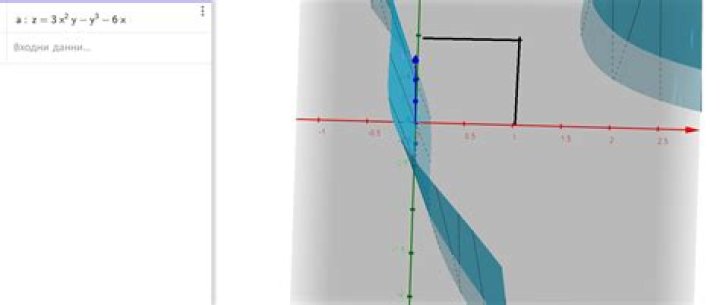
Given the function $f(x, y) = 3x^2y − y^3 − 6x$
- Find the local extrema of $f(x, y)$.
Firstly I find the partial derivitives, namely:$fx'=6xy-6, fxx''=6y$
$fy'=3x^2-3y^2, fyy''=-6y$
$fxy'=6x,fxy''=0=fyx''$, thus \begin{matrix} 6y& 0 \\ 0 & -6y \end{matrix}So $\Delta_2(x,y)=-36y^2<0$ and there are no local extrema.
2)Find the smallest and largest values of $f(x, y)$ in the set$M = [{(x, y) : x ≥ 0, y ≥ 0, x + y ≤ 1}]$and find the points in which those values are achieved.enter image description here
But how am I even supposed to find extrema in $[o,1]$ since in the graph there are no points?
$\endgroup$ 11 Answer
$\begingroup$Extreme values in a closed, bounded regions will either be at a local extrema or on the boundary. So you need to check the values of the function along the boundary of the region. You do this by reducing it to a one variable equation on the boundary.
For instance, you have $x=0, y\in [0,1]$ is one boundary, so plugging in $x=0$ has you finding the extreme values of $-y^3$ in $[0,1]$. Again, the same rule applies, extreme values will occur at a local extrema or at an endpoint, so you'll check at $y=0,y=1$ and anywhere the derivative is 0.
Your other boundaries are $y=0, x\in [0,1]$, and $x+y=1$. We can solve for either x or y to reduce it to a one variable equation. For instance, you could plug in $y=1-x$, reduce it to an equation in $x$ with again boundary values of $[0,1]$
$\endgroup$