Distributivity of Conjunction
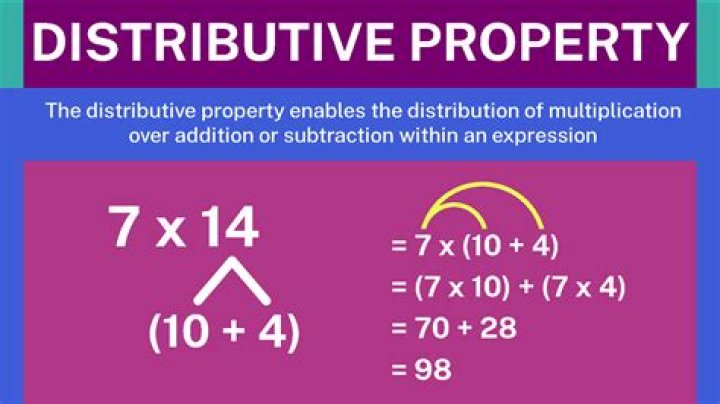
I am having trouble with understanding how distributivity of conjunction applies in a problem where I must prove: $$ \neg (a \wedge \neg b \vee \neg c) = \neg (a \vee \neg c) \vee b \wedge c$$
My proof so far goes
$$ \neg (a \wedge \neg b \vee \neg c)$$ $$ = \neg a \vee \neg (\neg b \vee \neg c)$$ $$ = \neg a \vee \neg \neg b \wedge \neg \neg c$$ $$ = \neg a \vee b \wedge c$$ $$ = (\neg a \wedge c) \vee (b \wedge c)$$ $$ = \neg(a \vee \neg c) \vee b \wedge c$$
I am not sure if the step from the 4th to 5th line is correct. The distributivity property as I understand it is $ (x \wedge z) \vee (y \wedge z) = z \wedge (x \vee y)$. I feel like it shouldn't apply in this case because the situation I have in line 4 is more like $ (z \wedge x) \vee y$. Does the presence of the parentheses prevent me from using the distributive property or do they go away after I distribute the negative sign?
$\endgroup$ 21 Answer
$\begingroup$There are two distribution laws:
Conjunction distributes over disjunction: $x\land (y\lor z)=(x\land y)\lor(x\land z)$
Disjunction distributes over conjunction: $x\lor (y\land z)=(x\lor y)\land(x\lor z)$
Also recall that conjunction and disjunction are both commutative.
$x\land (y\lor z)=(y\lor z)\land x=(y\land x)\lor(z\land x)=(x\land y)\lor(x\land z)$
$x\lor (y\land z)=(y\land z)\lor x =$ et cetera