Distinguish *measure* vs. *count* in definition of *continuous* vs. *discrete*
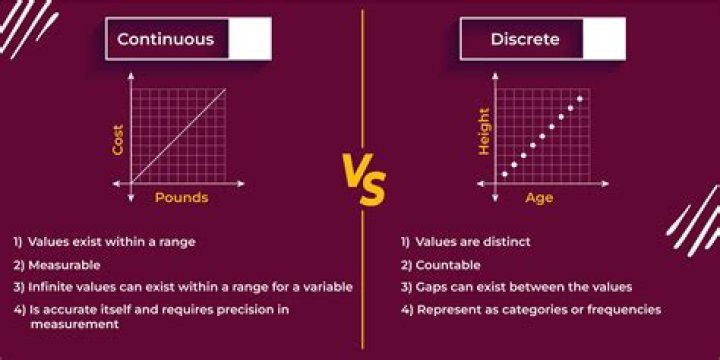
I have to point out that, when analyzing a probabilistic variable, it is more clear to define continuous and discrete in terms of cardinality:
discrete: (of a variable or data) assuming a value from a finite or countably infinite sample space; i.e., $\exists k\in\Bbb{N} : |\Bbb{U}|=k|\Bbb{N}|$
continuous: (of a variable or data) assuming a value from an uncountably infinite sample space; i.e., $\not\exists k\in\Bbb{N} : |\Bbb{U}|=k|\Bbb{N}|$ equivalently $|\Bbb{U}|\notin\Bbb{N}\cup\{\aleph_0\}$ (usually equivalent to $|\Bbb{U}|=\beth_1$)
Nevertheless, my high school math course for probability and statistics asserts the following:
discrete: countable
continuous: only measurable
It is clear to me where “countable” comes from; however, the distinction from “measurable” seems insignificant to me. Is measuring not just counting units? And, when humans measure continuous variables, doesn’t unavoidable error constrain the data to discrete classes? And is discrete data not measurable? I’ve looked for an alternative definition thats on-level with my course to no avail.
Could someone please explain what the impoverished definition is trying to communicate and/or why it might make perfect sense to the rest of my classmates (who, like my teacher, were baffled when I tried to redefine continuous and discrete in terms of cardinality)?
$\endgroup$ 72 Answers
$\begingroup$I am answering this question as a mathematician who has become a teacher of science. I think that what might be required here are some quite simplistic meanings for countable and measurable. They will make sense to a scientist, but they will not be entirely satisfactory to a mathematician...
Objects could be called countable if you can pick them up one by one and literally count them. To do this they need to be distinguishable one from another and have some kind of clear demarcation between each other.
So I can count the number of leaves on a plant and I can count the number of segments on a worm. I can count the number of grains of sand on the beach, but it is becoming rather difficult.
When I look at a piece of paper and wonder about its size, I find that I don't have anything to count. Perhaps I could count the number of atoms along its width, but this is practically impossible.
When I hold a lump of metal in my hand and wonder about its mass, I can't distinguish the atoms to count them.
In both these cases, where counting becomes difficult / impossible, we can still measure something. What we create is some kind of scale (usually but not necessarily linear - think pH) and we try to match up the object we are measuring up against that scale. The scale is based on some kind of proxy for the counting that we are unable to do. When I measure current, for example, I look for the movement of the needle on my galvanometer to indicate the relative size of current. I do this because I can't count the quantity of charge that passes per second.
Having described what it is to count and to measure, we can then return to your definitions.
Something that is discrete can be counted, so it is countable. It may also be measurable: think of a bucket filled with grains of identical grains of sand. Although they are countable, it might be easier to devise a weighing device that will have a scale indicating the numbers of grains of sand.
Something that is continuous, however, cannot be counted. It is therefore only measurable. The word 'only' is important in the definition. It reflects the fact that measuring is a poor cousin of counting.
$\endgroup$ $\begingroup$The word measurable has a precise mathematical sense and there is a measure theory that is actually closely related to probability. This is obviously not the sense of the word in your course as it is not high school mathematics.
I think the word is used here in the sense of a physical quantity that can be measured such as length, temperature, velocity, etc. I think you are correct in pointing out that we only approximately measure this quantities and there is always an error. For example the length of an object looks simple at high scale level, but at the atomic scale, the definition seems much harder to grasp.
In this case, you must consider that the mathematical model is only an approximation of reality. It is very common for mathematical models to be valid only at a certain scale. You need to distinguish the random variable, that belongs to your model, from the real world quantity that it represents.
$\endgroup$ 2