Deriving the Maclaurin Series for sin(x)/x
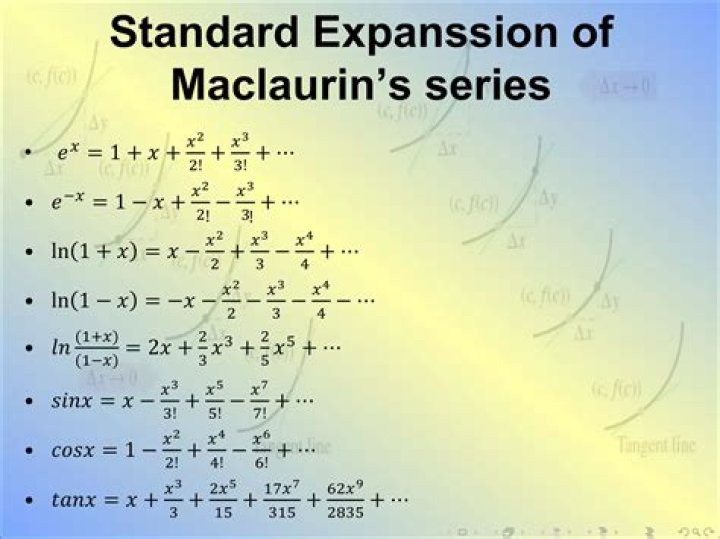
When finding the Maclaurin series representation for sin(x)/x, I decided to multiply the Maclaurin series for each individual function first.
The Maclaurin series for sin(x) is: $\sum_{n=0 }^{\infty}\frac{(-1)^{n}x^{2n+1}}{(2n+1)!}$
The Maclaurin series for 1/x is: $\sum_{n=0 }^{\infty}(1-x)^{n}$
So wouldn't the Maclaurin series representation for the both of these would be multiplying their power series together in order to obtain:
$\sum_{n=0 }^{\infty}(1-x)^{n}\frac{(-1)^{n}x^{2n+1}}{(2n+1)!}$
However, I've seen solutions that just divide the Maclaruin series for sin(x) by x; but why are you allowed to do that? Doesn't "x" also change with each terms (it has its own Maclaurin series)
$\endgroup$ 61 Answer
$\begingroup$There are several misconceptions in your post. I think the main thing here is to remember that the $\sum$ symbol means:$$\sum_{n=0}^\infty a_n = a_0 + a_1 + a_2 + \cdots$$If this is kept in mind, then a lot of what I'm about to say will be clearer.
First, you cannot multiply $\sum a_n$ with $\sum b_n$ to get $\sum a_n b_n$. In other words:$$\left( \sum_{n=1}^\infty a_n \right)\left( \sum_{n=1}^\infty b_n \right) \neq \sum_{n=1}^\infty a_n b_n$$meaning that$$(a_1 + a_2 + a_3 + \cdots) (b_1 + b_2 + b_3 + \cdots) \neq (a_1b_1 + a_2b_2 + a_3b_3 + \cdots)$$
Second: Remember that a Taylor series centered at $c$ has the form$$\sum_{n=0}^\infty a_n(x-c)^n = a_0 + a_1(x-c) + a_2(x-c)^2 + \cdots$$and a Maclaurin series is just a Taylor series with $c = 0$:$$\sum_{n=0}^\infty a_n x^n = a_0 + a_1x + a_2x^2 + \cdots$$Here, the $a_n$'s don't depend on $x$, meaning they shouldn't have any $x$'s in them.
What does this mean for you? It means (first of all) that the series you wrote down$$\sum_{n=0}^\infty (1-x)^n \frac{(-1)^nx^{2n}}{(2n+1)!}$$is not a Taylor series (so, in particular, it's not a Maclaurin series). Also, your series for $1/x$ is a Taylor series centered at $x = 1$, but it is not a Maclaurin series.
Finally, if your Maclaurin series is$$\sum_{n=0}^\infty a_nx^n = a_0 + a_1x + a_2x^2 + a_3x^3 + \cdots$$then dividing by $x$ gives\begin{align*} \frac{1}{x}\sum_{n=0}^\infty a_nx^n & = \frac{1}{x}\left(a_0 + a_1x + a_2x^2 + a_3x^3 + \cdots\right) \\ & = \frac{a_0}{x} + a_1 + a_2x + a_3x^2 + \cdots \end{align*}This last series is not a Maclaurin series because of the $a_0/x$ term --- unless $a_0 = 0$, in which case the $a_0/x$ term goes away.
$\endgroup$ 2