Create a New Public Folder in Windows 10 install
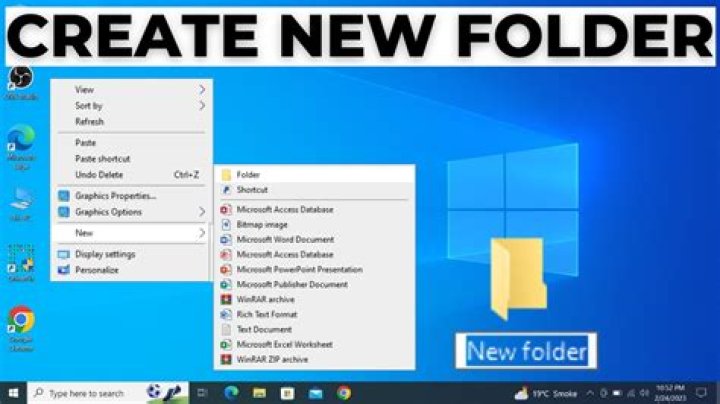
On a fresh Windows 10 install, I want to create a new Folder in \Users\Public that works the same as all the other folders in this folder. Specifically I want the Properties-Location Tab and the modified name displayed in Windows Explorer(IE Create a new folder My3DModels, have it show in Explorer as Public My3DModels and have the ability to control location).
When I look at the folders in \Users\Public in Windows Explorer(Running as Administrator), it shows them all named Public ...(IE Public Documents, Public Videos, Public Music, etc.). If I drop into a Command Prompt(Running As Administrator), a DIR /A /Q command shows they are named(Documents, Videos, Music) - it also shows they are simple folders, not symlinks or junctions.
When I look at the folders in Windows Explorer(Running as Administrator) and show properties, they all have a location tab. If I create a new folder in C:\Users\Public (At this root not some sub-folder), the new folder appears to be a simple directory and has no location tab.
Things I've tried.
- Create a new folder in Windows Explorer(Running As Administrator)
- Copy an existing folder like documents(In Command Prompt(Running As Administrator)) using XCOPY /E Videos My3DModels) - results in a plain directory.
- Create a new library(Using Windows Explorer(Running As Administrator)
Any more information on how this feature works. I saw this which is a good explanation of what these folders are for and how to use them, but not the underlying technical bits.How do "Public" folders technically work on Windows?
1 Answer
The various display names of "Public ..." are assigned via the desktop.ini file found within each folder. For example, here is the desktop.ini file for Public Desktop :
[.ShellClassInfo]
LocalizedResourceName=@%SystemRoot%\system32\shell32.dll,-21799
This allows displayed folder names to change with the selected display language while the underlying file system name remains the same for the sake of working code.
Custom icons are also specified in desktop.ini files. Explorer only processes a folder's desktop.ini file if the folder's ReadOnly attribute is set.
Although the default folders all specify a resource feference when assigning a LocalizedResourceName, a literal string (unquoted, spaces OK) also works:
[.ShellClassInfo]
LocalizedResourceName=Public My3DModels
You can toggle the folder's ReadOnly attribute by opening a PowerShell window at the locatiion and typing:
(gi .).Attributes += 'ReadOnly' to set the attriubte
- and
(gi .).Attributes -= 'ReadOnly' to clear the attriubte (very useful in trouble-shooting "duplicate folder name" issues)
Don't be confused by the Read-Only checkbox in the folder's Properties dialog, ignore it!
Note: Once a folder has a LocalizedResourceName specified in its desktop.ini file, any renaming operation initiated from the Shell/Explorer will modify the assignment in the desaktop.ini file, not the actual file system name.
Getting a Locationi tab is a different matter. The Public/Common folder locations are specifed in the Registry under:HKLM:\SOFTWARE\Microsoft\Windows\CurrentVersion\Explorer\User Shell Folders\
and while the various Public folders have a Location tab in their Properties dialog, it lacks the buttons found on the per-user folders that allow for relocation. The text box does not allow editing. So even if you could get your custom folder to display a Location tab, it wouldn't be functional for re-location, you'd still have to do that via Regisry edit.
If you want to integrate your folder into the Desktop or This PC, you'll need to create a CLSID that can be added to the appropriate namespace and references your folder as its target.