Contradicting Equations describing "Resultant" velocity
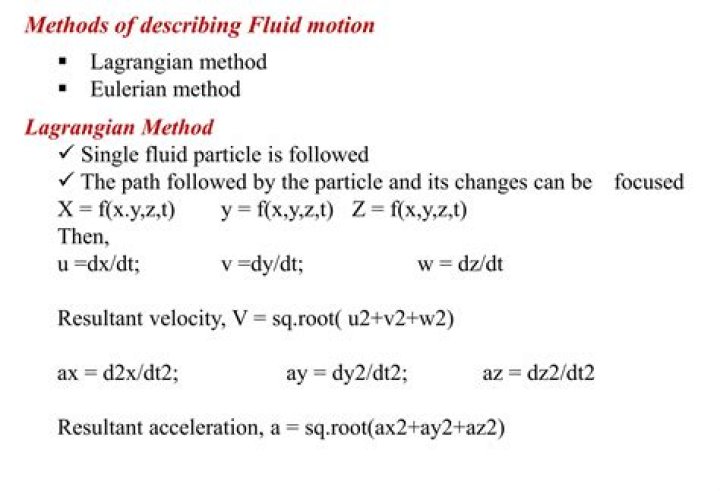
My definition of resultant velocity:
If a certain object, at some instant of time, moves with speed $v_x$ in the x-direction, and with speed $v_y$ in the y-direction, then it has a resultant velocity which is the hypotenuse of the triangle formed by the two vectors: one in pure x-direction with magnitude $v_x$ and the other in purely y-direction with magnitude $v_y$.
Thus, $v_x$ and $v_y$ are components of the resultant velocity vector.
One way to represent how the three vectors relate in magnitude is by the classic Pythagorean theorem: (1)$$v_{res}^2 = v_x^2 + v_y^2$$
However, the object's position also follows the Pythagorean theorem (for ease-of-calculation let's say at $t = 0$, the object is at the origin, yielding:$$r(t)^2 = x(t)^2 + y(t)^2$$
Differentiating with respect to $t$ on both sides, and re-arranging yields: $$ r\dot r = x\dot x + y\dot y $$(2)$$ \dot r = v_{res} = \frac{x\dot x + y\dot y}r$$
Of course (1) and (2) are not equivalent - but if they are both derivations for the resultant velocity of an object - why are they not the same? I suspect that the two setups are representing different scenarios (like the first one is a simple relative speed problem and the latter is a related rates problem involving, perhaps, 2 objects).
$\endgroup$ 12 Answers
$\begingroup$They are not the same in general because derivative of the norm is not the same as norm of the derivative.
Speed $v$ is the norm of the velocity vector $\vec{v}$, i.e.$$v = \|\vec{v}\| = \left\|\frac{d}{dt}\vec{r}\right\|= \|(\dot{x},\dot{y})\| = \sqrt{\dot{x}^2+\dot{y}^2}$$Your second concept is the derivative of the norm of the position vector $\vec{r}$, i.e. $$\dot{r} = \frac{dr}{dt} = \frac{d}{dt} \|\vec{r}\| = \frac{d}{dt}\|(x,y)\|=\frac{d}{dt}\sqrt{x^2+y^2}.$$
For a simple example, consider a circular motion given by $\vec{r}(t) = (\cos t, \sin t)$. The velocity is$$\vec{v}(t) = (-\sin t,\cos t) \implies v = \|v\| = 1.$$Your other concept is$$r = \|\vec{r}\| = 1 \implies \dot{r} = 0$$so clearly $v \ne \dot{r}$.
It is interesting to see that it always holds $\dot{r} \le v$. Namely, we have$$2r\dot{r}=\frac{d}{dt}(r^2) = \frac{d}{dt}\|\vec{r}\|^2 = \frac{d}{dt}(\vec{r}\cdot\vec{r}) = 2\dot{\vec{r}}\cdot \vec{r} = 2\vec{v}\cdot\vec{r}$$and hence Cauchy-Schwartz inequality implies$$r\dot{r} = \vec{v}\cdot\vec{r} \le \|\vec{v}\|\|\vec{r}\| = vr \implies \dot{r} \le v.$$
$\endgroup$ 2 $\begingroup$The position of a moving object in the plane can be represented in cartesian coordinates as
$$ p = (x(t), y(t)) $$
It is a vector quantity. The velocity is obtained as
$$ \dot p = (\dot x(t), \dot y(t)) = (v_x(t), v_y(t)) $$
which is a vector while the speed is $||\dot p|| = \sqrt{v_x^2+v_y^2}$
now if you derive the scalar quantity $||p||^2$ the result is
$$ \frac{d}{dt}||p||^2 = 2p\cdot \dot p = 2 x v_x+2y v_y \ne ||\dot p||^2 = v_x^2+v_y^2 $$
which is a scalar
$\endgroup$