Backspace, Tab, Del and arrow keys not working in terminal (using ssh)
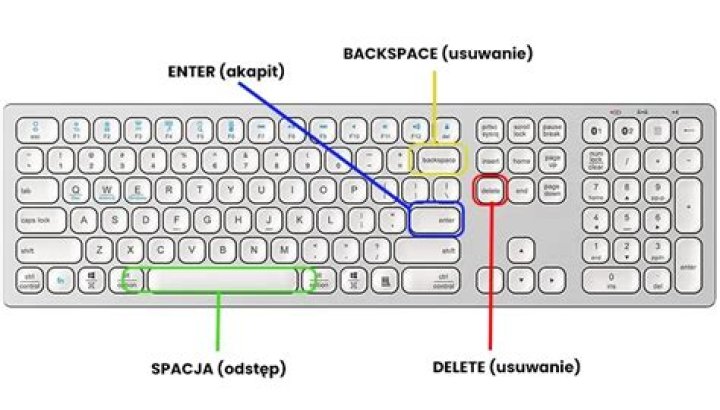
When I ssh into another Ubuntu machine with my account (with sudo permissions), my backspace key generates some awkward symbols on pressing. Also Tab, Del and Arrow keys don't work.
On the other hand, I also have another account on the same machine & when I ssh through this account, its terminal works perfectly fine. I couldn't figure out why is this happening.
911 Answers
EDIT: Reference: Mateng's answer
Mateng is close in that I think you're probably running Bourne Shell. But you shouldn't be editing your /etc/passwd file directly. Try using the chsh command instead:
chsh -s /bin/bashThe -s flag will make the new shell (Bash in this case) your login shell, going forward.
4when you first ssh in, try these two commands
stty sane
export TERM=linux
I have to do this on some machines that I go into to fix exactly this problem
9The following changes solved the problem for me. First, I checked which shell was running:
$ echo $0which returned:
/bin/shAs I read in this post in Ubuntuforums, changing the shell to /bin/bash brings the solution. So I edited my user settings in /etc/passwd to:
johndoe:x:1001:104:John Doe:/home/johndoe:/bin/bashI logged out, then logged in again. Strangely, I had to switch the shell manually (maybe some cache was active) by entering this:
/bin/bashVoila!
[The problem arose due to a distribution update.]
One of the easiest ways to fix this problem is to type /bin/bash at the command line interface prompt:
$ /bin/bash
The afore mentioned command will execute the Bourne Again Shell on top of the existing shell as a subprocess. This presents the disadvantage of utilising more resources, but nothing has to be edited and no special permissions are required. For example, in recent Kubuntu versions it will start a /bin/bash session atop the default /bin/dash command line shell interface.
To persist the changes, however, one possibility is to edit the /etc/passwd file and add/edit/replace the default shell to /bin/bash after the last ':' character in the line corresponding to the user. In order to edit this file, though, administrator privileges would be required.
'Gbnome Terminal' does not exactly emulate 'xterm' ..
from: Wikipedia >> GNOME Terminal
GNOME Terminal emulates the xterm terminal emulator and provides some of the same features.
A treatise on the issue and solution(s) can be found here:
Linux Backspace/Delete mini-HOWTO
Every Linux user has been sooner or later trapped in a situation in which having working Backspace and Delete keys on the console and on X seemed impossible. This paper explains why this happens and suggests solutions. The notions given here are essentially distribution-independent: due to the widely different content of system configuration files in each distribution, I will try to give the reader enough knowledge to think up his/her own fixes, if necessary.
I assume that the Backspace key should go back one character and then erase the character under the cursor. On the other hand, the Delete key should delete the character under the cursor, without moving it. If you think that the function of the two keys should be exchanged, in spite of the fact that most keyboards feature an arrow pointing to the left (←) on the Backspace key, then this paper will not give you immediate solutions, but certainly you may find the explanations given here useful.
Simplest solution given (which may work here) is to use: bash$ export TERM=gnome
I tried all the above plus notes from (this link) with no success. You may want to check vim is installed.
I usually use vi not vim. So I installed vim.
$ sudo apt-get install vimAfter that, the keyboard strokes started working properly when I executed vi. Looking at the output of the following, it looks like vi was made an alias to vim after the install:
$ ls -al /etc/alternatives | grep vi
lrwxrwxrwx 1 root root 18 Jan 13 09:38 vi -> /usr/bin/vim.basic
As a root user edit /etc/passwd file for your user and change from /bin/sh to /bin/bash
hdfs:x:1020:1001::/home/hdfs:/bin/sh to hdfs:x:1020:1001::/home/hdfs:/bin/bash
This worked for me.
None of the answers above fixed my identical problem, i.e. cannot use backspace or similar keys after sshing to a remote from an Ubuntu (here ubuntu-17.10 with ncurses-6.0).
It ends up being a problem with terminfo. Basically, my gnome-terminal says it's an xterm-256color terminal (via the TERM variable, which is exported by ssh to the remote) but the remote didn't have a terminfo configuration for xterm-256color.
Doing the following fixed the issue:
$host: echo $TERM
xterm-256color
$host: infocmp >terminfo.src
$host: tic terminfo.src
$host: scp .terminfo/x/xterm-256color $remote:/usr/share/terminfo/x/xterm-256color
infocmp, without any option, produces a source listing for the terminal in the environment variable $TERM. So it is equivalent to infocmp -I $TERM.
Then the resulting source is compiled via tic.
Finally, install the corresponding terminfo configuration to the remote location. So, the next time I connect to $remote via $host, it will know about my terminal.
2This is a compatibility issue with the keyboard, i.e., how it is interpreted in the host system. You might have to use j or h to move in the vi editor in the command mode. Arrows will not work.
Check the profile preferences->compatibility in the host system for that specific user.
Okay, I know this isn't a "solution" per say, and it may not help many of you, but hopefully it helps at least 1 of you. It did fix my problem.
My six month old banged on my keyboard, and my arrow keys stopped working on my putty session into a Debian box. They did work everywhere else (all other programs outside of putty). After Googleing and even landing here (I was going to close this tab, it didn't solve it for me). I tried something. I opened a new ssh session to the same box, and my arrow keys worked. I joined my screen session and they did not work. So something just happened tied to the current screen session disabling the arrow keys. Unfortunately, I was (am) in the middle of a big project, have 28 windows open in my screen session, and didn't want to close the session, loosing my place on all 28 windows.
So..
While on the bash shell, I tried all combinations I could think of, of CTRL + up, down, left right, ALT + up, down, left, right, SHIFT + up, down, left right, CTRL+ALT+ up, down, left right, CTRL+SHIFT+ up, down, left right, etc. Still with no luck, I also tried the windows menu and windows app keys with up, down, left right.
Now my arrows work again! Something about one of the combinations of what is above and the arrow keys fixed it.
If you are added as an other new user then use the following command which add you to the sudo group. This should be done using the main user account who has permission to use sudo.
$ sudo adduser username sudo
$ sudo adduser username admin