Area of part of the surface of a sphere
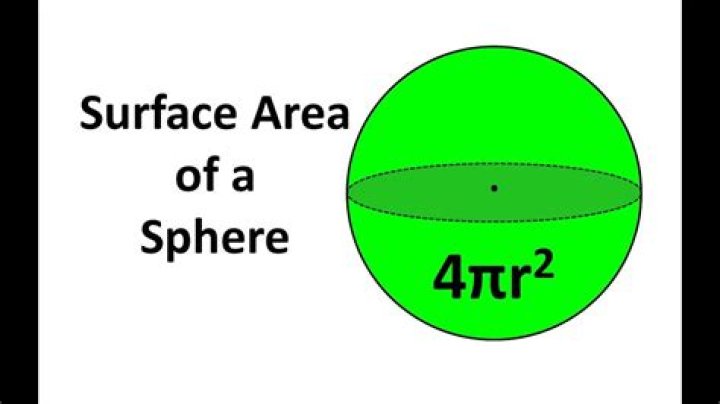
Calculate the area of sphere $x^2+y^2+z^2 = 1$ where $a \le z \le b$ where $-1 \le a \lt b \le 1$.
So I know I should use the usual parameterization: $r(\phi, \theta)=(cos(\phi) sin(\theta), sin(\phi)sin(\theta),cos(\theta))$ and it is easy to see that $\sqrt{det(D_r*D_r^T)} = sin(\theta)$. All that remains is putting it all together into the integral formula. I know that $0 \le \phi \le \pi$, but I need to find the limits of $\theta$, and in order to do that I need to find the exact limits of $z$ - using $a,b$.
How can I find the right limits, knowing that $-1 \le a \lt b \le 1$?
EDIT
Using cylindrical coordinates as Emilio suggested -
$x=\rho cos(\phi), y=\rho sin(\phi), z = z$
And we get that - $\sqrt{det(D_rD_r^T)} =1 $, so: $\int_A ds = \int_0^{2\pi}d\phi\int_a^b1dz = \int_0^{2\pi}b-ad\phi = 2\pi(b-a)$
Is that correct?
$\endgroup$ 03 Answers
$\begingroup$In your notation (see here for a comparison of the different notations used) we have:
$0\le\phi<2\pi$
and the limits for $\theta$ are given from $z=\cos \theta$ so, in your case:
$\arccos(a)\le \theta \le \arccos(b)$ ( for $\theta$ counterclockwise from south to north pole)
But, why don't use cylindrical coordinates ?
$\endgroup$ 7 $\begingroup$At $z=a, \theta=\cos^{-1}(a/r)=\cos^{-1}a$
At $z=b, \theta=\cos^{-1}(b/r)=\cos^{-1}b$
The limits of $\theta$ are $\cos^{-1}b\to\cos^{-1}a$, and $\phi$ goes from $0\to2\pi$, because you want to complete one full revolution around the $z$ axis.
The required area is $\displaystyle{\int\int}_A rd\theta\times r\sin\theta d\phi\Big|_{r=1}=\int_0^{2\pi}\int_{\cos^{-1}b}^{\cos^{-1}a}\sin\theta d\theta d\phi=2\pi(b-a)$
$\endgroup$ $\begingroup$Archimedes showed that that there was an equi-areal map from the surface of sphere to the surface of a cylinder.
The area of the band around the sphere is proportional to the width of the band and the radius of the sphere. $2\pi(b-a)$
$\endgroup$