absolute value proof with properties and axioms
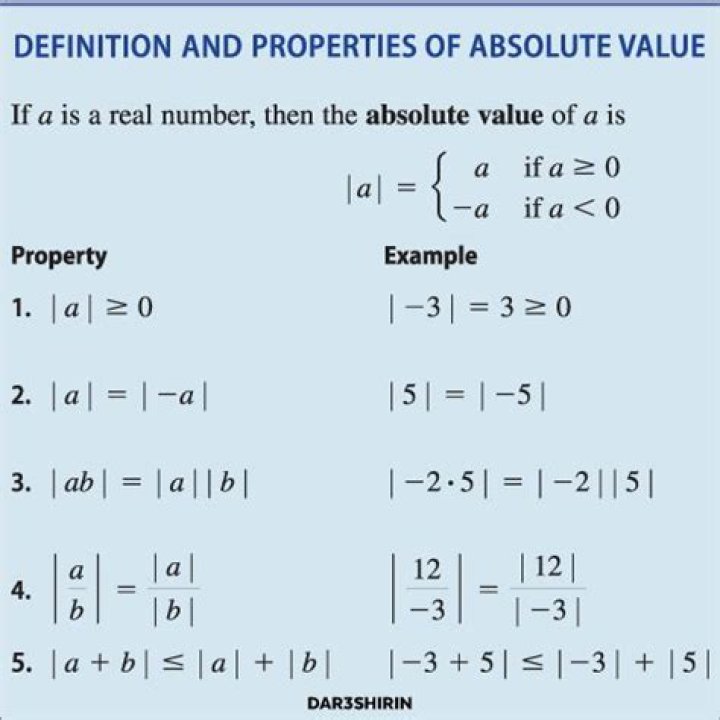
I'm in precalculus and totally new to this 'proofs with axioms' concept, and it's stumping me beyond belief. I get the concept, I just don't understand how to start or where to implement the proofs.
The problem states: Give a careful proof of $|a-b| = |b-a|$. Justify each step.
This is how I attempted…
assume $a,b ∈ \mathbb{R}$
$(a,b) \geq 0$, only $0$ when $a=b$ -absolute value property 1
Lets say $|b-a| = c$, so
$|a-b|=c$
$|a||-b|=c$ (absolute value property 3)
$|a||+b|=c$ (absolute value property 2)
$|b||a|=c$ (commutative for multiplication axiom //would this be addition?)
$|b||-a|=c$ (absolute value property 2)
$|b-a|=c$ (absolute value property 3)
$|b-a|=|b-a|$ ??
I'm confused because the hint for the homework says I will need to use one of the distributive rules, the definition of absolute value, and some of the absolute value properties. ..I have no idea what the point would be to use the distributive rule for this. Add another factor? For the sake of what?
Here are the absolute value properties…
- $|a| \geq 0$
- $|a| = |-a|$
- $|ab| = |a||b|$
- $|a/b| = |a|/|b|$
- $|a+b|<= |a|+|b|$
3 Answers
$\begingroup$Think. Why does $|a-b| = |b-a|$. Is it because $a - b$ and $b-a$ are equal? No because they aren't. So when else can absolute values be equal? Well, what's your casual definition of absolute value? Something like $|a| = a$ if $a \ge 0$ and $|a| = -a$ otherwise? Or maybe some casual "the absolute value without regard to sign?
In any event, $|a - b| = |b -a|$ because $a - b$ and $b-a$ are the "same size" but opposite signs.
So which properties will we use?
Let's see:
|a|≥0
Not really. But are non-negative.
|a|=|−a|
Absolutely $(a - b) = -(b - a)$ so $|a-b| = |-(a-b)| = |b-a|$
So here is our proof in !!!ONE!!! line:
$|a-b| = |-(a-b)| = |b-a|$ (property 2)
That's it. We are done. That is EVERYTHING we need to do.
|ab|=|a||b|
Useless, we don't have any multiplication.
|a/b|=|a|/|b|
or division.
|a+b|<=|a|+|b|
This tells us $|a - b| \le |a| + |-b| = |a| + |b|$.
And $|b - a| \le |b| + |-a| = |b| + |a| = |a| +|b| $ .. which seems to need more work if we are going to get it to help us.
$\endgroup$ $\begingroup$Typically absolute value problems are best solved by using cases.
Remember the definition of absolute value by |x| = {x if x > 0 -x if x < 0}
Therefore we have two cases for |a - b|. Either (a - b) > 0 or (a - b) < 0.
Separately for each case (and you can write this in your homework as Case 1 (a - b) > 0 with an underline or sometheing like that), prove the equality you're trying to get. If (a - b) > 0 => |a - b| = (a - b) (definition of absolute value). Moreover, -(a - b) = (b - a) < 0, so |b - a| = - (b - a) = (a - b) = |a - b|. That proves the equality for case 1. See if you can tackle case 2 on your own. Note that |b - a| = - (b - a) by the definition of absolute value. Because (b - a) < 0, i.e. (b - a) is negative, |b - a| must be -(b - a) which would be a positive number. Like |3 - 5| = |-2| = -(-2) = 2.
Hope that wasn't too convoluted. For this one just use the definition of absolute value, and you'll be all set. Don't feel bad if the techniques of proofs from definitions or axioms are tricky for you. Almost everyone (except maybe titans like Gauss, Riemann, or Terry Tao) has trouble with rigorous proofs at first. Believe me that plenty of people major in math thinking that it's like Calculus only to discover--to their horror--that advanced mathematics consists of definitions, conjectures, and proofs. So don't feel disheartened. You got this! :)
$\endgroup$ $\begingroup$Your idea is wrong, this is not true in most cases:
$$|a+b|=|a||b|$$
However this is true:
$$|ab|=|a||b|$$
This can be easily proved considering some cases, $a$ is positive $b$ is negative $a$ is negative $b$ is positive...
It is given to you as property (3).
The trick is this,
$$|a-b|=|(-1)(b-a)|$$
Can you use a theorem now?
$\endgroup$ 2