A proper definition of $i$, the imaginary unit [duplicate]
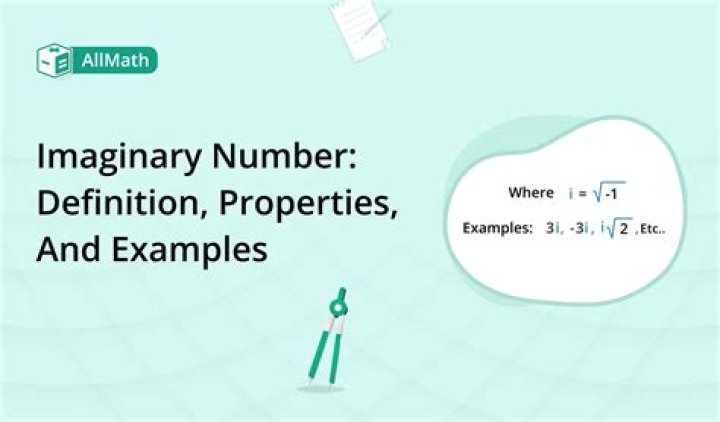
Back when I was in high school, which was a long time ago, I recall my math teacher telling me that the definition of $i$, the imaginary unit, is $\sqrt{-1}$. Knowing little, at the time, I accepted it without thinking twice.
Several years later when I was in my Complex Analysis class, one of my classmates asked for the distinction between defining $i$ in the normal way, i.e., $i=\sqrt{-1}$, and more ambiguous way, $i^2=-1$.
Now that I thought deeply about it, I have some suspicions about what my high school teacher taught me at the time.
Firstly, at least at the level of high school, one normally defines a square root of $x$, $\sqrt{x}$ as the positive quantity of either number that satisfies the property $\sqrt{x}\sqrt{x}=x$. Clearly, when $x<0$, such notion of sign makes no sense, so one cannot honestly talk about $\sqrt{-1}$ with the naive definition of the square root.
Fine, we are better than that, and we may say that $i$ is the principal root of the equation $x^2=-1$. We then just denote it by $\sqrt{-1}$. But this way of denoting $i$ brings with its convenience a litany of disasters, including the famous $1=-1$ fallacy.
Namely, one can show that $1=-1$ by $1=\sqrt{1}=\sqrt{(-1)(-1)}=\sqrt{-1}\sqrt{-1}=i^2=-1$.
Many a people have pointed out the haphazardness of assuming that the familiar law $\sqrt{x}\sqrt{y}=\sqrt{xy}$ holds when $x,y<0$. But at the same time we have no shame in writing $\sqrt{-5}$ as $\sqrt{5}i$ (in fact, I think this is the very reason of inventing the imaginary unit). Is it not terribly unnatural that the law holds for odd number of negative factors, and not so for the even ones? In fact, is there an example where this native rule (that when you have a negative radicand, you can pretty much apply the familiar laws of exponents)? (I guess it makes the first question.)
Secondly (so this officially marks the second, and the last question), which ought to be the definition of $i$, in your opinion? I believe that many people choose to write $i=\sqrt{-1}$ as it gives some illusion of determinancy, whereas $i^2=-1$ does not. But I still prefer the latter definition, and it seems to be the consensus of every complex analysis textbook that I've ever laid my hands on.
Better yet, I believe that the complex numbers shold be defined as the algebraic completion of reals or an isomorphic field to $\mathbb{R}\times\mathbb{R}$, with some special addition and multiplication rules, but I guess it is a little bit out of high school students' league (at least for most of them).
EDIT: Thank you all for your insightful responds, but there still one thing none of you has yet answered... Is there a conunter example to the law where we have $\sqrt{-A}$ for $A>0$, we have $\sqrt{A}i$?
$\endgroup$ 35 Answers
$\begingroup$The mathematically correct way is to call $i$ a root of $x^{2}+1$, or equivalently to call it a symbol satisfying $i^{2} = -1$. There is no determinacy, nor does there need to be, because $i$ and $-i$ are indistinguishable algebraically (they are both conjugate roots of the same irreducible polynomial in $\mathbb{R}[x]$). There is no "principal" root of $x^{2}+1$.
You need to be careful when you consider $\sqrt{xy}$, obviously; it is only stated to be equal to $\sqrt{x}\sqrt{y}$ when $x$ and $y$ have real square roots.
Finally, complex numbers: sure, algebraic completion of the reals. Perfectly sound definition. A field isomorphic to $\mathbb{R} \times \mathbb{R}$: makes no sense, this is not a field without adding multiplication rules, and adding those is really not motivated unless you ALREADY have $\mathbb{C}$ in mind, which makes it rather circular.
$\endgroup$ 2 $\begingroup$This a definition of a complex number which can resolve many of the problems which you mentioned:
A complex number is a ordered pair of two real numbers: $(a,b),\,\, a,b\in \mathbb R$, with the following definitions of arithmetical operations:
Complex numbers can be added: $(a,b) + (c,d) = (a+c,b+d)$.
They can be multiplied by a real number: $c(a,b)=(ca,cb)\,\,c\in\mathbb R$.
They can also by multiplied: $(a,b) \cdot (c,d) = (ac-bd,ad+bc)$.
Then let the number (1,0) be denoted by 1 and the number (0,1) be denoted by $i$. 1
It follows from the definition of multiplication that $i\cdot i=(-1,0)=-1$.
With this definition, there is no need for $i$ to be "imaginary" and also it is totally determined that only (0,1) is $i$ and not (0,-1) so it removes the ambiguity of $i=\sqrt{-1}$.
1 Note: Using this, we have $(a,b) = a(1,0) + b(0,1) = a \times 1 + b \times i$ which can be written as $a+bi$.
$\endgroup$ 7 $\begingroup$To address your final question, the natural extension of the square root function to the complex numbers is done by writing it in polar form, $z=re^{i\theta}$, with $\theta \in [0,2\pi)$, $\sqrt z=\sqrt re^{i \theta/ 2}$. Then if you have a real positive number $A$, $-A=Ae^{i\pi}$, so $\sqrt {-A}=\sqrt Ae^{i \pi /2}=\sqrt Ai$, so no, this is never a problem with positive numbers.
This naturally shows where the problem with breaking apart two square roots occur in the complex numbers: In order to have $\sqrt {z_1z_2}=\sqrt {z_1} \sqrt {z_2}$, we need $Arg(z_1)+Arg(z_2)<2 \pi$, because otherwise we have a problem with the principal arguments changing. (That's an if and only if, btw)
$\endgroup$ 3 $\begingroup$We define $\Bbb C$ to be $\Bbb R \times \Bbb R$ with the usual multiplication which makes it into a field. You seem to be familiar with this.
Once we have this, we simply define $i$ to be one of the roots of the equation $x^2 + 1 = 0$ in $\Bbb C$. There is no algebraically independent way to choose a "principal root" of this equation, because indeed, there is a field automorphism of $\Bbb C$ characterized by $i \mapsto -i$. Thus, we can choose $i$ to be either root of the equation without changing anything which really matters.
$\endgroup$ 2 $\begingroup$It is not what we do believe is better or what we want to define as $i$.
The definition says that $i$ is a number with the property $i^2=-1$.
Stick with the definition and proceed.No square roots are needed.As you will see,everything you want to prove or solve in complex analysis uses only $i^2=-1$.
This is why definitions are not made in one minute.Because we use the least we can to obtain the more we want.